

Here in my neck of the woods, there have been some hints of autumn with cooler mornings and evenings, but we are still in the 90s during the day. But the changing of the weather (not quite SWEATER WEATHER) has a couple of questions popping into my inbox. They can be summed in two basic queries: “I am early in my recovery and have previously battled SAD–largely by eating. What can I do?” and “Can certain foods help keep me energized and in a good mood during dreary months?”
First, I am not a doctor, so I can offer only what I have seen in personal or professional scope as a certified holistic and nutrition coach. If you are suffering from significant anxiety, depression, or mood swings, please consult an appropriate physician or qualified medical professional.
Seasonal depression is a more common term for a condition named SAD (Seasonal Affective Disorder). SAD is a recurring depression that often occurs in the late fall and winter months. Contrary to common belief, there are some actions you can take that can really help combat seasonal depression long before you feel its effects.
Can food help us maintain a good mood?
During cooler months, it can be easy to hunker down and just be inside more. If you’ve ever found yourself in front of the TV after a bad day, mindlessly digging ice cream out of the container with a spoon or plowing through a bag of chips, you know that mood and food are sometimes linked. This can be made worse during periods of shut-in or isolation. But while stress eating is a verified phenomenon, the relationship between food and actual mood disorders, such as depression, is less clear. Can the things you eat influence your mood, stress, or anxiety — and if so, what are some changes that can potentially improve your mental health or boost your outlook?
“The research regarding dietary factors and depression is still inconclusive,” says Patricia Chocano-Bedoya, a visiting scientist in the Department of Nutrition at the Harvard T.H. Chan School of Public Health. But there have been hints that food may play a role in depression and mood.
Food-based Strategies That May Help
I have found, even if only anecdotally, a snack and a nap can go a long way with both mood and energy-which can negatively impact your mood and tolerance levels. The following strategies can be incorporated by nearly everyone.
Eating regularly
If your blood sugar drops you might feel tired, irritable and depressed. Eating regularly and choosing foods that release energy slowly will help to keep your sugar levels steady.
Slow-release energy foods include: pasta, rice, oats, wholegrain bread and cereals, nuts and seeds.
Quick tips:
- Enjoy your meals mindfully. Mindful eating can increase your enjoyment of the present moment.
- Eating breakfast gets the day off to a good start.
- Instead of eating a large lunch and dinner, try eating smaller portions spaced out more regularly throughout the day if possible and feasible for your habits and lifestyle.
- Sometimes pairing a fat or protein rich food with foods which make your blood sugar rise and fall rapidly, such as sweets, biscuits, sugary drinks, and alcohol can be a good way to enjoy those foods.
Staying hydrated
If you don’t drink enough fluid, you may find it difficult to concentrate or think clearly. You might also start to feel constipated (which puts no one in a good mood).
Quick tips:
- It’s recommended that you drink between 6–8 glasses of fluid a day.
- Clean water is a precious gift so take advantage of it when possible!
- Tea, coffee, juices, smoothies, and water-rich foods all count towards your intake.
Getting Nutrient Variety Each Day
Vegetables and fruit contain a lot of the minerals, vitamins and fiber we need to keep us physically and mentally healthy.
Eating a variety of different colored fruits and vegetables, as well as seasonal picks when possible, means you’ll get a good range of nutrients. For example, folate, thiamine, and magnesium are believed to heighten your mood. Research has shown that these minerals positively impact those with depression.
Quick tips:
- Fresh, frozen, tinned, dried and juiced (one glass) fruits and vegetables all count towards your 5 a day.
- Choose fall foods like lentils, leafy greens, pistachios, and pumpkin seeds as great sources of these minerals.
Looking after your gut
Sometimes your gut can reflect how you are feeling emotionally. If you’re stressed or anxious this can make your gut slow down or speed up. For healthy digestion you need to have plenty of fiber, fluid and exercise regularly.
Healthy gut foods include: fruits, vegetables and wholegrains, beans, pulses, live yogurt and other probiotics.
Quick tips:
- It might take your gut time to get used to a new eating pattern, so make changes slowly to give yourself time to adjust.
- If you’re feeling stressed and you think it is affecting your gut, try some relaxation techniques or breathing exercises.
Getting enough protein
Protein contains amino acids, which make up the chemicals your brain needs to regulate your thoughts and feelings. It also helps keep you feeling fuller for longer.
Protein is in: lean meat, fish, eggs, cheese, legumes (peas, beans and lentils), soya products, nuts and seeds.
Quick tip:
Whatever your diet, why not do some research into other foods that contain protein, and find something new to try?
Managing caffeine
Caffeine is a stimulant, which means it will give you a quick burst of energy, but then may make you feel anxious and depressed, disturb your sleep (especially if you have it before bed), or give you withdrawal symptoms if you stop suddenly.
Caffeine is in: tea, coffee, chocolate, cola and other manufactured energy drinks.
Quick tips:
- If you drink tea, coffee or cola, try switching to decaffeinated versions.
- You might feel noticeably better quite quickly if you drink less caffeine or avoid it altogether. If you are sensitive to caffeine, experiment with alternatives like chai tea or a full-bodied tea.
Eating the right fats
Your brain needs fatty acids (such as omega-3 and -6) to keep it working well. So rather than avoiding all fats, it’s important to eat foods that contain some of these.
Healthy fats are found in: oily fish, poultry, nuts (especially walnuts and almonds), olive and sunflower oils, seeds (such as sunflower and pumpkin), avocados, milk, yoghurt, cheese and eggs.
Additional Tips to Stave off SAD
Enjoy the sunshine
If you are able to get outside during the day, do so as often as possible. When it is not, consider the purchase sunlamps that mimic the rays of the sun. Light therapy is one of the most recommended treatments for seasonal depression.
Quick tip:
- Sunlamps can cost anywhere from $100 to $250. However, the special sunlamp replacement bulbs can cost as little as $10 for a pack of three.
Nurture your social life
Being socially active is an important part of keeping up your spirits during the wintertime. Avoiding feelings of isolation and loneliness are probably the second-best thing that you can do to feel the warm fuzzies that can keep us in good spirits.
Quick tips:
- Have a weekly dinner with your friends. If the weather is nasty, host a dinner in your home or head over to your friends’ house for a nice evening. If the weather allows, head out for a weekly cocktail night with the girls or poker night with the boys
- Vacation in the winter instead of the summer! This may be a good choice if you are really affected by seasonal depression. If your budget doesn’t allow for two vacations a year, try swapping out the summer one for a winter one. Additionally, maybe it can be a gift to you and your family at the holidays. It may also help you avoid the stressfulness of holidays too!
Take Care of Your Body
Taking care of the physical needs often take back seat in the winter. Let this season be a time of rejuvenation and pampering instead!
Quick tips:
- Make an effort to exercise daily. Video games that are action based (we love our dancing ones!) can be helpful. Online classes and virtual apps can keep you going all year!
- Wear clothes that make you feel good. I tend to dress for comfort but always feel better if I wear “outside” people clothes inside or for meetings!
- Maintain a healthy skincare regimen. This can be a real treat in the drier climates!
I certainly hope that you find something of value here ahead of the longer nights and the onset of SAD this year! If you have any other tips, please comment and pass it on to someone who may benefit!
Share this with someone you think will be uplifted and put the tips to use!
In health,
Leslie
How Self-Care Can Help Ensure Good Mental Health
The overall objective of World Mental Health Day is to raise awareness of mental health issues around the world and to mobilize efforts in support of mental health. As an Eating Disorder Recovery Coach, mental health is centered in my work. Today, I invite you to take part in observing World Mental Health Day and help normalize talking about mental health, seeking treatment for mental health issues, and increase awareness of mental health disorders.
Have you ever experienced bouts of feeling down, like your mind is racing, or that you’re generally out of sorts? Have they ever disrupted your life or made you wonder what was going on with you? When you strengthen your mental health, you’ll feel better all over and your life will be more satisfying. Try scheduling a Pamper Day to get a much-needed and beneficial mental health day.
A pamper day. “What on earth is that?” you think to yourself, and “Why should I take a day off just to pamper myself?” Or perhaps you want to take a pamper day, but you keep pushing it back. Pampering yourself is whatever pampering yourself means to you. Caring for yourself doesn’t mean treating yourself to luxuries you don’t need or can’t afford. Pampering is in the eye of the pampered!
It could be a day where you play video games, watch YouTube videos, hop on a streaming service, drink some wine, draw a bath, light some candles, take it easy, and relax—a day where you put your happiness first. A day you choose–not one you are forced to take due to stress or illness!
This concept might sound foreign to you, especially if you are someone who struggles to make yourself rest.
Consider these powerful reasons to take a pamper day:
- You get to plan your ideal day. Choose a day. Mark it on your calendar. That day is your day. Your pamper day. Spend quality time with yourself doing something you enjoy. Spend that day enjoying and exploring, relaxing, and learning more about yourself.
● Giving yourself time off is important. It’s also important not to feel guilty for taking time off. So, take a break from your normal day-to-day. You’ll return revitalized and happy.
- It’s invaluable for your physical and mental health. Rest is as vital to your health as good nutrition and exercise. Occasional pamper days save you a bunch of health problems. You get to take a breather when no one else is taking a breather.
● Most of your pamper day methods cost nothing but are excellent for your mental health. Your body benefits when you take a break. Rest is essential. If you don’t let your body rest once in a while, you’ll get overwhelmed by fatigue, eventually.
- Take a step away from all the stress. The effects of stress on our bodies have been well-documented – from its impact on our skin to our hearts. If you don’t have fun once in a while, you will have no alternative to a stressful life.
● You’ll take days off to rest, not when you want to or because you want to, but because you’re forced to.
● Compare that to getting a massage to take the pressure off. You’ll come out of it feeling energetic and refreshed. It will make you feel better and have more energy.
● You also recover from emotional stress. You reduce your risk of burnout. Reduce your stress level by taking a relaxing break from the grind.
- Gives you something to look forward to. What’s the point of working so hard if you don’t get to enjoy the fruits of your labor? You won’t feel bad about doing something nice for yourself if you plan for it. You are motivated to work harder when looking forward to a day of relaxation.
● The opportunity to recharge and do something nice for yourself because you deserve it works as a morale boost. It’s a way of appreciating and encouraging yourself. It also sets you up in a positive cycle as you develop a healthier relationship with your work.
- You make wiser decisions. Relaxed people make better decisions regarding their well-being, work, and even relationships. With the stress taken away, you can examine matters more carefully. Decisions are well thought through and balanced.
- You have more positive relationships with others. When you return after taking a day off, your mood improves drastically. When we are stressed, we snap at others, and things get ugly fast.
● After a pamper day, you help others genuinely and not out of a place of resentment. Self-care and self-love are important because if you don’t show them to yourself, you can’t sincerely show them to others.
- You are more productive. When working out, actual gains occur during recovery. That applies to working. Rest heightens your productivity. The productivity momentum is not broken when you rest, and it is balanced. Let your body rest to recover from the work you put it through.
● When you take a day off, it is essential to do so in a guilt-free way. Do something that is recharging. Don’t waste your pamper day stressing and beating yourself up for being unproductive. Letting your mind and body rest is part of being productive.
Try these ideas on your day of relaxation and enjoyment:
- Do what you enjoy. This is not a chore day (unless that makes you happy). No one else can create your happiness. You’ve got to do it for yourself.
• Create spaces you love within your home.
• Take long walks or practice yoga to bring peace and serenity.
• Read about the places you wish to travel to someday.
- Avoid involvement with people who bring you down. Many of us have a friend or family member who dampens our spirits when we’re happy or excited about something. Recognize that while you probably can’t change that person, you can choose your relationship with them.
• Although you might feel compassion and understanding for those who bring you down, it’s important to ensure that they don’t interfere with your own happiness and health.
- Get plenty of sleep and eat right. When your body is well nourished, your mind and spirit tend to be healthier as well. You’ll most likely be in a better mood and have the energy to accomplish more.
- Surround yourself with people you love. Stick to the people you’re comfortable with, who show their love for you. A strong, emotionally supportive network is your safety net when times get rough. You’ll be able to call your friends or family when you need a listening ear or a shoulder to lean on.
Regardless of how old you are, where you live, or what you do for work or fun, good mental health is integral to your life. Use these ideas as inspiration to come up with ways to ensure your life is happy, fulfilling, and bountiful.
Taking a day off when you’ve planned to and can enjoy it is much better than taking a day off because your body is broken and fatigued. Resting seriously makes a huge difference. You will come back massively refreshed and able to boost your productivity. Rest is critical to progress.
Wishing you the best in wellness!
I would love for you to comment with your go-to pampering activities!

Mindful Eating Helps You Become Mindfully and Intentionally Connected to Your Body
Mindful eating is often thought of as a way to change your eating habits and help you understand more about your food fears and anxiety, and help you to have a better relationship with food. But it can also heal your relationship with your body and actually help you identify many physical traits you weren’t even aware of.
Body Image Basics
The term body image refers to the way we think, feel about, see our body, and how we perceive others think, feel, and see our bodies. We receive messages about our bodies and how they should look, from external sources like family and the media constantly from an early age. An unhealthy body image can lead us to struggle with low self-esteem and can adversely affect many different aspects of our lives, including the development of an unhealthy relationship with food.
Positive body image is essential to both physical and mental health. Positive body image has been tied to health promoting behaviors like movement and lower stress levels. Conversely, low or negative body image has been linked to depression and eating disorders (Ferreiro et al 2014).
The pervasive thought in today’s culture is that body image issues primarily affect young girls in Western culture. This belief falsely assumes that others, including boys, men, older women, people of color, and members of the LGBT+ community do not struggle with the stress of assimilation or pressure to conform. I believe that these groups can suffer from poor body image even more. The truth is, body image issues can and do affect people of all ages, genders, and backgrounds.
It follows then that a negative body image can change our relationship with food as food becomes a way to alter the body’s appearance. Food is not only essential for our survival, but it is interwoven throughout our culture in many ways. However, if our relationship with food is laden with guilt, shame and anxiety, it can take the pleasure away from the experience of nourishing our bodies and connecting with others in this way. Practicing Mindful Eating is one way to reconnect with our inner wisdom and foster a healthy body image and relationship with food.
Mind-Body Balance is Natural
We are all born with an innate ability to regulate our eating. This is ability is driven by a deep and natural connection to our internal cues and sensations. Babies, for example, are experts at knowing just how much to eat and when they are full. They are unconcerned about timing and other external information about meals and amounts. They learn about meal times and such. Even this simple social construct starts the process of disconnecting us from our internal cues. It only worsens as we grow up.
In today’s culture, pressures to adhere to certain diets, exercise regimes, and body image ideals can lead us to engage in weight loss efforts, dieting behaviors, and even what is essentially normalized disordered eating. Instead of listening to constant messages from our bodies, we let external cues be our guide. This can often lead us to feeling out of control of our eating and disconnected from our bodies. So what can we do to regain this mind-body connection?
The Power of Mindfulness and Mindful Eating
Mindfulness can be defined as the practice of being in the present moment with awareness, openness and acceptance. It is not new by any stretch although its popularity in the West makes it seem so. Mindfulness encourages us to pay attention to our bodily sensations, feelings, and thoughts without judgment and has been shown to enhance both psychological and physical well-being.
Mindful eating is a mindfulness practice that encourages us to understand the impulses and the motivations that drive our urge to eat for comfort or distraction. We learn to tune into our bodily sensations and decide whether or not we are physically hungry. If the answer is yes we are physically hungry, we can eat while paying attention to the appearance of the food, the smell, the taste, and what the mind is thinking about the food that we are eating. If we understand that we are not physically hungry but are responding to learned impulses to comfort or distract, then we are able to explore those urges and the meaning behind them; to develop the knowledge and skills to eat in the way that aligns with our well-being goals and needs and to develop a healthy relationship with food.
Mindful Eating is Not a Diet
As you can see, this practice is not a diet. there is no judgement about food choice or amount. There is no emphasis or pressure to change your body shape or size. Those things may or may not happen as a result of Mindful Eating. The point is about the relationship you have with your body and food. The goal is connection to your inner wisdom and balance between the mind and body.
The core premise of mindful eating is ‘it is not what you eat but the way you eat ‘, (Albers, 2008).
Common Reasons for Eating
- To sustain life
- For energy
- To satisfy physical (and other types of) hunger
- To comfort or calm ourselves
- To cope with overwhelming emotions
- To deal with childhood/family trauma/issues
- To feel safe or because it is the safest choice available
- It is reliable
- As a distraction
- Because we don’t know what else to do.
Eating is necessary to sustain life and for energy to live life in a fulfilling and satisfying way. Eating is and should be an enjoyable part of life. However, eating can become problematic when we overuse it in some of the ways listed above, particularly when other areas are not getting the attention they need. Although eating can be valid ways to manage our feelings when we are unsure of other ways to manage or cope, we can learn other ways to cope as well. Reconnecting to our bodies can help us feel better about our bodies and give us the courage to heal from past hurt, develop new coping skills, and develop confidence in our ability to meet our needs.
Mindful Eating Strategies to Reconnect Mind and Body
Use the following questions as a guide to help you tune into the messages that your body is communicating with you. I suggest using a journal to jot down anything that comes up for you as you practice mindful eating and how your body responds. It doesn’t need to be more than a notebook designated for your reflections
How Do You Feel When You Are Full and Satisfied?
Instead of just focusing on how you THINK about being full, try to use your body’s sensations and cues to know when you FEEL full. Fullness is usually easier to learn first as it is typically a physical sensation that is hard to fake or substitute. You may overstuff yourself trying to feel that fullness and that is okay. It will not be long before you recognize your body’s sign that means enough. Additionally, the mindful eating will help you enjoy food more and you will notice satisfaction doesn’t require feeling stuffed. That is often an uncomfortable feeling that your body will want to avoid. Often times, we are motivated more by our thoughts, worries, and fears, as opposed to our actual feelings. Your body is smart and will tell you everything you need to know, if you know how to listen to it.
It tells you when you are hungry, what you are craving, and when to stop eating as you get closer to fullness. But if you wait for your mind to tell you, you might find sometimes you purposely eat less than your body needs to cut calories, or you eat well past fullness because you just aren’t paying enough attention.
Being mindful with your body and paying attention to how you feel while eating (and throughout the rest of your day), is so beneficial.
What Foods Don’t Feel the Best?
Another way mindful eating helps with your body’s mindfulness is by understanding how different foods makes you feel. This isn’t about restricting your food or trying to go on a diet, but simply being more aware of the way different foods affect you. Be sure to consider how you feel at the time you eat them and how you will feel a couple of hours later.
For example, you might find that while you absolutely love sweets, they tend to cause a pretty bad energy crash if you have them earlier in the day. By being mindful, you then know to save them until later in the day.
Use what you learn through mindful eating to decide what meals are most appropriate for different times of the day, while still eating all the foods you love that nourish your body properly.
Are You Learning Your Actual Hunger Signals?
As you practice mindfulness more, you can start noticing your hunger signals in addition to fullness cues. This might take a little more time if you are used to just eating at designated times during the day, or you have an issue with emotional eating. But the more you practice mindfulness, the easier this will be to pay attention to.
The real win is learning to recognize hunger cues and the types of hunger. Yes, the types! Physical is the only one that needs food. There is nose, eye, and emotional hunger too! Every time I go to an carnival and smell corn dogs and funnel cakes in the air, I want them! Even if I just ate! I have the best memories tied to them and it never fails so I make the necessary adjustments so I can enjoy them and still feel good. That typically means eating some fruit before and sharing the corn dog with my little girl and sharing a funnel cake with the big girl! Everybody is happy!
Consider the following:
- Eat free from distractions
- Eat slower
- Question your cravings
- Explore your food and mood connection
Mindfulness and specifically mindful eating, can be a helpful tool to increase both body awareness and acceptance. It can do the same for your relationship with food as well as discussed on my blog. However, if you feel that your relationship with food is a problem, or you are wanting to further improve your relationship with your body, coaching may help. Complete my online inquiry if you are in need of additional support.

Back in the Day!
Were you an active kiddo? Chances are if you are over the age of 35, you came from generations that were told to “go play outside” on the regular. Some kids weren’t even expected home until the street lights came on. Those days may be long gone, but your fun memories are right there when you call them forth. What was your favorite form of play? Dodgeball? Tag? Riding your bike? Skateboarding? Jumping rope? Or just good old play-until-you drop on a playground?
Just because you are a grown-up doesn’t mean you can’t still enjoy the activities you loved as a kid. There isn’t any activity that is off limits, and engaging in childhood favorite activities can be more than nostalgic. It can actually improve your health – both physical and mental. Calling forth great memories and engaging in activities that have special meaning can cure fatigue and burnout.
I remember drinking off of water hoses and going from yard to yard, to the neighborhood parks and gathering places all day on the weekends and on breaks from school. We seldom played inside–usually only in inclement weather. Growing up in Oklahoma that was usually just tornadoes or lots of snow. Even in those times, we had games we would play until it was too bad!
Old School with a New School Twist
It’s fairly common for some organized activities to be available as an adult. Softball leagues, bowling teams, and pickup basketball all come to mind. What about other activities from days gone by? There are some old favorites that are making a comeback in organized activities:
Professional tag/frisbee
Professional tag is seriously a thing. World Chase Tag is an organized group that competes in arenas in obstacle course settings and is making an old favorite new again. I am also adding here pro frisbee-style games like Ultimate Frisbee and Disc Golf! These are modern recreational and professional takes on old school frisbee, which has never gone out of style!
Parkour and free running
With the international craze of competitions like Ninja Warrior, free running and parkour has grown in popularity. Parkour is the art of using obstacles to move over, under, across, and through. Free running is included in parkour, but it adds elements of twisting, flipping, and turning along the way. While training or instruction can be beneficial to avoid injury, it may not be necessary.
Martial Arts tricking
“Tricking” is using elements of martial arts in open spaces to flip, kick, jump, and tumble. As a child, you may have participated in martial arts and earned colored belts that indicated your achievement. Tricking is a modern way to play at martial arts.
Roller Skating and Derby
Roller skating in and of itself is still going strong! There are family and adult only classes and leagues where I live and even travel. There is no shortage of skate influencers to follow for mini lessons or trick and skill ideas either! Roller skating takes on a new meaning when combined with tough attitudes and crazy monikers. Roller derby clubs are available for men and women and can be fiercely competitive.
No matter what activity you enjoyed as a kid, you can easily pick it back up as an adult and regain the sense of freedom and fitness you once had. Spend some time thinking about the ways you enjoyed play as a kid and try some of the activities out. A quick Google search will tell you if there is an organized version of your favorite activity near you. If not, consider starting one yourself and see who shares your enthusiasm.
Hope you spark some joy and fun with some of your childhood favorites! Enjoy the summer!
Please share, like, and comment if you enjoyed the brief read! I would love to hear about your favorite childhood games and activities!
+ Anti-Diet Culture, Community, Functional Fitness, holistic wellness, Longevity, Mind-Body Connection, Public Health, social wellness
Team up to Win!
by Coach Leslie
As a mom and movement coach, I am an advocate of team sports for my girls. They are very different personalities and ages (21 and 9), and differently-abled (the 21-year-old is a typically abled person and the little one has down syndrome), but there have always been team activities they both participate in and enjoy. I am no less an advocate for my clients to get involved in team sports. Even well into adulthood it is an amazingly fun way to get your body moving all while making friends and having a blast!
And no wonder! Many people thrive in teams. They love the camaraderie and friendly competition. They feed off the energy of others, and enjoy relying on a group for a common outcome. For this type of people, organized teams or groups are a winning option. Being part of a team is rewarding, inspiring, and motivating.
Is there a time you were part of a team?
Did you:
Play sports as a kid?
Participate in scout troops?
Attend college as an athlete?
Serve in the military?
Represent a professional sport?
Getting active may simply be a sign-up away when you find a team or group that piques your interest.
Looking for a team and don’t know where to find them?
Try these ideas:
- Community colleges
- City Park and Recreations
- Work-based intramural and weekend teams
- Church leagues
- Meetup.com
- Craigslist
- Facebook groups
- Gym-based leagues and groups
There are many ways to connect with like-minded men and women who want to be a part of a team and compete or simply engage in an activity. The bigger the area you live in the higher the chances are you’ll make a connection.
Some of the most common and not-so-common groups are:
- Softball teams
- Road biking groups
- Lumberjack competitors
- Adult track groups
- Basketball leagues
- Strong man competitors
I really enjoy the co-ed adult recreational volleyball league I play with weekly. It is hosted by the local Parks and Rec and is for older adults and free! Additionally, I teach for the local YMCA association and can attest to the various group and team play opportunities. It never ceases to inspire to see how beneficial movement is to the mind, body, and spirit across the lifespan. I teach, dance with, and play volleyball with several folks in their 80s and 90s!
Thinking sports aren’t for you? Consider these alternatives to team sports:
- Hiking groups
- Bird watching groups
- Kayaking groups
- Ski clubs
- Fishing clubs
- Walking groups
These activities still create a bond and get your body moving. You don’t have to be all guts and glory to be part of a team. Finding an activity that you love and a tribe to do it with is a wonderful thing. If the activity you love doesn’t have a formalized group, it might be your calling to step up and create the opportunity to bring people together. After all, this is how the Pickleball craze started!
Consider:
- Being a coach
- Hosting a group
- Launching a league
- Organizing a community event
- Raising awareness
Your passion may become the next big wave of activity that storms the internet and gets people moving their bodies and getting healthier. Whether you love to be hard-core and down and dirty with competition, or you simply enjoy the teamwork of a group, you can engage in a team and have a great time. You can increase your stamina and range of motion, gain community, and find new ways to connect and feel part of something bigger than yourself.

This month, I am sharing about ways to rekindle joy and fun in movement. So, if you are looking for a great way to move your body, dancing is a fun (and my absolute favorite) way to get your body moving. Dancing can be done no matter your age or ability level. One can dance standing, from a chair, or even lying down in bed! All you need is your idea of good music and space to move safely. From finger dancing in the car to a dance party in your living room, dancing enables you to move and express yourself without rules or restriction!
Here are some amazing benefits of dancing that will inspire you to get moving:
- Dancing increases your heart rate, which is great for cardiovascular health
- Dancing causes serotonin levels to increase (nature’s mood stabilizers)
- Dancing is aerobic and can burn calories while you’re having fun
- Dancing builds muscle and fine motor skills, improving agility and stamina
- Dancing is a form of expression that transcends differences and creates common ground in groups
- Dancing is a great escape from stress or anxiety and can help revive the spirit
- Dancing is a form of worship and restoration of the soul
Dancing comes in many styles and is a true form of self-expression. From formalized dancing to freestyle, unbridled movement, dancing can be experienced by anyone anywhere. It is universally understood and undeniably a way to unite all ages, genders, and affiliations.
There is no wrong way to dance. Your preference might be taking classes or participating in a group setting. You may love dancing alone or in the club. Your favorite way to dance might be with your kids or under the stars with your spouse. There is no limit to where, when, and how you can dance.
Some possible dance options are:
- Taking Zumba or U-Jam Fitness classes
- Community College courses in dance
- Organized dance troops for tap, jazz, modern dance, or others
- Watching dance videos
- Dancing at a concert
- Creating a playlist for at-home dance parties
- Playing dance-based video games
The options truly are limitless, and there is no way you can go wrong. Here are some ideas to get you excited about creating a personalized dance plan:
- Create a playlist of your favorite songs. Consider multiple lists for different moods or occasions. Choose your list based on what feels right in the moment and dance away.
- Join a group that meets regularly. Build new relationships and social experiences through dance.
- Watch street performers dance for entertainment and be inspired by their passion.
- Attend a ballet or dance competition and expand your exposure to multiple dance genres.
Being a dancer requires no skill, nearly zero financial investment, and can only bring you positive outcomes. No matter what sort of music you love, your body can benefit from moving with the beat – so turn up the music and start dancing!
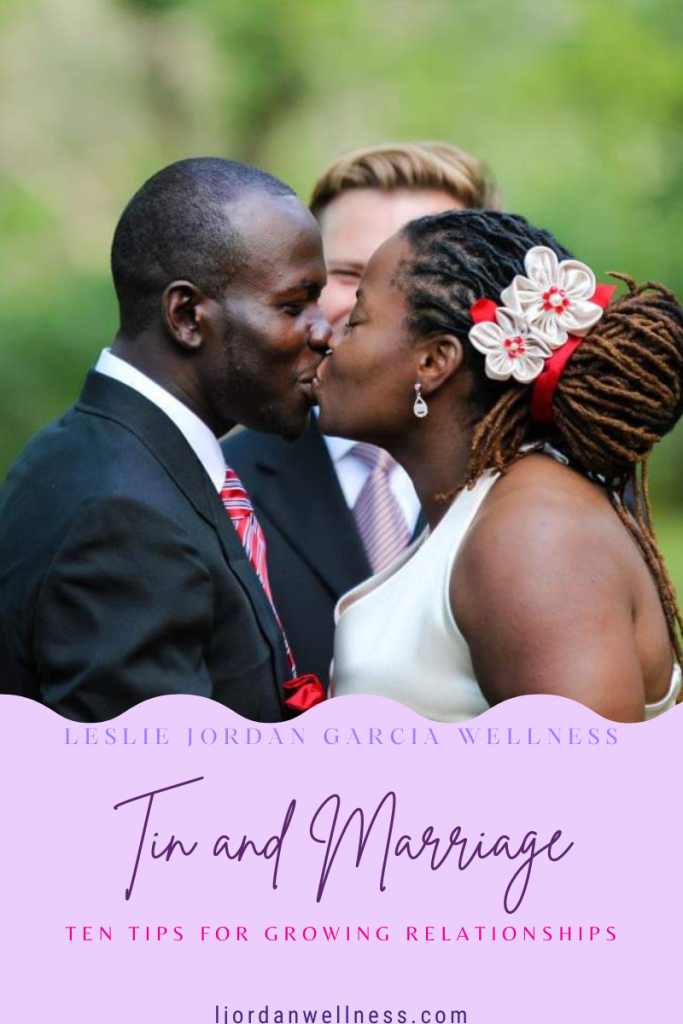
This week, my husband and I will celebrate ten years of marriage. That is no small feat. There is so much give and take and often we individuals don’t want to compromise. After ten years, I can say that me and my husband did not know each other that well when we got married! But, at this point, in for a penny, in for a pound and with lots of gratitude, we not only made it this far, but are happy in our marriage.
Any one married knows how much work a marriage can be. We were a blended family when we married and now have a daughter together. He did not speak very English and we mostly conversed in Spanish. Looking back, there were quite a few miscommunications and bouts of silence to avoid upsetting the other person. These are things that make us laugh now.
In the United States, the traditional gift for the tenth anniversary is tin. I think this is so appropriate! A soft, silvery metal, tin is pliable but resists corrosion from everyday things like tap water. But it can be damaged with strong abrasives or acids. If that doesn’t sum up a ten-year marriage, I don’t what does!
Together, we have become more pliable as a couple but also as individuals. I remember wanting to start a fight one time because he bathed our daughter in the backyard and snapped her onesie on the outside of her pants. Really? He had seen his child properly dressed hundreds of times at that point! But to him, that just wasn’t important. He’s been frustrated at me for things that I thought were inconsequential too and so it goes. We both learned early on that acidic or stinging words and attitudes were only useful on the way to unhappiness so we dug our heels into respect and communication when we both could handle it.
Ten Tips
Relationships are hard work. Anyone who’s been in a relationship for more than six months knows this. There’s plenty of advice out there that you’ve heard at least 100 times.
However, there are probably a few things you’ve either never heard of or you’ve forgotten about. One of these forgotten items might make a huge difference in your relationship.
Consider these 10 relationship tips:
- Choosing a partner is a serious matter. Most people fail to appreciate the gravity of choosing a partner. This is especially true when it comes to marriage. Consider the amount of time and energy a partner requires. Now, consider the damage done to your life by divorce. Make your decision with care.
- Learn from your past. Look back on your past relationships for guidance in your current and future relationships.
● What do you want to change about yourself to be more successful in the future in your love life?
● What type of people are you regularly attracted to? Do you have a type? Is it a type that’s good for you? What does your relationship past suggest?
● What were the challenges in your past relationships? What can you do to avoid them in the future? Are you better equipped to deal with those challenges if they happen again?
- It takes years to REALLY know someone. Be careful about jumping in with both feet. While it’s not necessary to wait 10 years, keep in mind that you’ll still be learning new things about the other person for at least a decade. There’s more there than you can learn in just a year or two.
- No one can read your mind. Avoid saying the classic, “I shouldn’t have to tell you what’s wrong.” This is unreasonable. Take responsibility for helping others to satisfy your needs. It only makes sense to make it as easy as possible for someone else to make you happy.
- No one can fulfill all of your needs. There is no person that can satisfy every need you have. You’re going to have to rely on yourself and others to pick up the slack. No single person is a one-stop solution to your life.
- No one is perfect. If you want someone perfect, you’re either going to be disappointed or alone. You’ll have to accept some flaws in your partner. If you’ve chosen the right person, their positive qualities will far outweigh their bad.
- Avoid getting into a relationship to solve your problems. A relationship shouldn’t be based on solving your challenges. Get your life under control before getting involved with someone else.
- It’s hard to take back unkind words and actions. Think before you speak. There are things you can say in the heat of the moment that will never be completely forgotten.
- Your partner’s friends and family matter. You might not like the other important people in your partner’s life, but it’s important to make an effort to get along with them. Your relationship will suffer if you treat them badly or attempt to avoid them altogether.
- Always remember to treat your partner like they’re the most important person in your life. Because they may well be. The day-to-day grind can cause us to forget to treat our partner well.
● In fact, many of us ignore the niceties altogether and treat our partner worse than how we would treat a stranger. This is a mistake!
● Show your love in your thoughts, words, and actions. Even when you disagree, make your opinion known in a loving and respectful fashion.
Neglecting your relationship can have catastrophic consequences. Relationships require monitoring and maintenance to survive and thrive. Dust off these forgotten tips and put them to good use. Your relationship will be stronger and more satisfying for both of you.
I could go on and on, but Number 4 could have been my downfall! Traditionally, the third anniversary is leather (another material symbolizing ruggedness!) and the modern one is crystal. This year we did our leather gifts but I also gave him a crystal ball as that year was really tough in terms of developing a better communication rhythm. He got the joke and now it is a source of laughter. Either of us can just glance at it and we will immediately know that communication is faltering so we can regroup and communicate clearly! It keeps things light and always gets a laugh or funny story. That laughter–that is a bonus tip–always find a way to share a smile or laugh. Definitely softens the heart and fosters closeness!
We are all familiar with stress. Most of us even know that prolonged bouts of negative stress, or chronic stress, can be harmful to our emotional and physical health. But can it be avoided?
Stress is likely something everyone experiences, but that doesn’t mean that it has to get the best of you. Our bodies are essentially designed to make the most of a stress reaction, be catapulted into life-preserving action, so to speak. Chemicals flood our bodies and we get to the task at hand. From being jolted out of sleep by a crying baby (feeding it so it survives is preserving the species) to fighting off a wild animal, we react with more power, focus, agility, or quickness than our day-to-day activities require. Our bodies are also designed to completely recover from the stress episode. Here lies the rub.
Sources and Types of Stress
Modern life presents us with stressful events all day, every day. Traffic, noise, the barrage of violence on TV; we are almost at the tipping point all the time. Imagine if your life had other situations that created stress. Things like an illness, an impending birth, unemployment, or the stress of racism. The pressure could seem insurmountable.
Before you can find effective ways to cope and manage stress (READ: a stress management plan), you need to know the source of the stress. There are many different types of stress in your life, from financial to relationship stress. And to put it plainly, dealing with situations head-on and early on will always be the best policy!
Acute and Chronic Stress
First of all, two common types of stress are acute and chronic stress. All other types of stress will fit into one of these categories. Acute stress is more about individual situations that will lead to you feeling stressed out, such as your car breaking down or a relationship ending. With chronic stress, it is something you experience on a regular basis. This might be from work, finances, or other problems in your life that tend to keep happening over and over again. Chronic stress can also be related to a simple overwhelming feeling that you can’t quite keep up with everything in your life and are so overwhelmed on a regular basis that you experience stress almost constantly.
Personal and Relationship Stress
A very common reason to be stressed is due to your personal life, particularly with a relationship, family, or children. This type of stress can be acute, but is often related to chronic stress. You want your kids to be safe and grow up healthy, so this leads to being stressed about them almost constantly. Then acute forms of stress might be going through a divorce or feeling like your personal life is not quite what you would like it to be.
Work and Financial Stress
Another very common area of stress in your life might be related to your job or your finances, or a little of both. This can be from having a great job but not having enough time for anything but work, to where you bring your work home with you. Another way your job can stress you out is if you simply don’t enjoy it or you don’t get along well with co-workers. You might have financial stress like struggling to pay your bills, not advancing enough in your career, or being faced with last-minute expenses and no clue how to take care of them.
Seeking Professional Help
Getting professional help might seem like something only people with major relationship problems or mental health disorders get, but just about everyone can benefit from it. If your stress is getting to where you can’t take control of it and it is severely affecting your life, now is the time to seek help.
Why You May Need Help
First of all, it helps to know exactly why someone might need to seek a counselor or therapist for their stress. While it is true that there are many natural and healthy ways to relieve stress on your own, sometimes it tends to be a bit much. For example, if you are going through a major life event, such as a divorce, the emotional and financial stress can be overwhelming to where you can barely take care of yourself, let alone your kids. In this situation, seeking professional help is ideal.
Signs You Should Seek Additional Help
You should also know that stress can have a large impact on your overall health. It can cause mental and emotional health issues, including anger, resentment, depression, and anxiety. It also increases your risk of abusing drugs and alcohol. In addition, some physical effects include migraines, stomach pains, increased or decreased appetite, and insomnia. If you are struggling with any of these effects, it is a good reason to get professional help.
How a Helping Pro Can Help You
There are many ways a therapist, coach, counselor, or mentor can help you with your stress. Here are just a few of the different methods they use:
Family counseling – When your stress is the result of home or family issues, therapy with your entire family is highly recommended. The professional can work with you each individually, with you and your significant other, and with the entire family. This is often combined with talk therapy, where you can release some of the feelings or thoughts you have been holding back.
Pain coping therapy – If your stress is due to suffering from physical pain, especially chronic pain, then a therapist can help with that as well. While you should still see a medical doctor, the mental health professional helps you cope on a daily basis with the pain, instead of giving you options to relieve that pain. They help with the stress that often comes from physical ailments.
General Stress Management Plan– Everyone has different levels and sources of stress, but that doesn’t mean it isn’t severe enough for help. Therapists can also help with general stress, whether you are having a hard time with your kids leaving the nest, you are struggling with a career choice, or you have more serious problems that are causing your stress.
Life/Wellness Coaching – In my business, I offer a course on stress and assist my clients with identifying and balancing three key areas in their life so that they can experience some quick relief. I teach and practice practical, easy to incorporate methods and strategies that can de-escalate an immediate event or stress attack and others that help decrease the stress severity and longevity of stress reactions in the body.
To tell the truth 100% of the time may seem possible at first glance. But what about those little lies that are common in daily life? Like the ones we tell to protect someone’s feelings, or not revealing the real reason we ran 5 minutes to work. My personal favorite is now a reel on Instagram: your precious kid hands you a drawing that you could not identify to save your life and with eyes a-gleaming, “Can you guess what it is?” Are you really going to dim the light in that child’s face? Hopefully, you can come up with something clever to dodge lying in these instances but how easy is it to just tell a small fib?
Now, it is a lot easier to rationalize those big lies are the ones that count. After all, so many of those are actual crimes! So, naturally, there have been studies and research about it. What personalities are most likely to lie, lie detectors and their accuracy, even examining the body language of honesty, have all been studied to some extent. The verdict? Lying could be interfering with your physical and mental health. A recent study suggests that honesty really is the best policy.
A “Science of Honesty” project at the University of Notre Dame asked people to give up telling major and minor lies for 10 weeks. At the conclusion of the experiment, the test subjects reported that they felt less tension and sadness when they refrained from lying. They also reported that they had fewer physical symptoms, such as headaches and sore throats.
Incorporating complete honesty into your life can be difficult. But the rewards are amazing. Try these strategies to make it easier to avoid those “inconsequential” lies.
Guidelines for Being More Honest in Everyday Life:
- Be realistic. It’s estimated that the average person tells 10 or more lies per week. Becoming more candid will require a good deal of effort. Give yourself credit each time you dare to be forthcoming instead of hiding behind a fib.
- Stop making excuses. Becoming more accountable is a great place to start. When you show up late for an appointment, just apologize for running late instead of pretending there was a traffic jam.
- Fulfill your promises. There will be less temptation to make up stories if you keep your word in the first place. Accept your limitations and take on only what you can handle.
- Ask directly. Direct approaches work better than manipulation. Invite a friend on a weekend getaway instead of trying to convince her that she looks tired and needs a break.
- Deal with conflicts. We sometimes keep quiet because it seems easier than dealing with conflict. Examine whether you’re accommodating others to be kind or if it would be better to work out your differences.
- Present yourself accurately. Take risks and open up to others. Express your true feelings. State your opinions even when they’re different than the majority.
- Think like a nurse. A Gallup poll found that nurses were especially straightforward. That makes sense considering that a person’s health is often at stake. Consider your impact on the world when you’re feeling inclined to sidestep the truth.
- Speak tactfully. Uncomfortable subjects and situations are easier to face when you choose your words carefully. It’s also helpful to select an appropriate time and place. Think about how you’d want someone to talk to you about a difficult topic and give them the same courtesy.
Guidelines for Being More Honest in Specific Situations:
- Evaluate your parenting. Your kids provide a lot of motivation for becoming a worthy role model. If you embrace honesty in your life, your children will follow suit. Help them develop solid communication skills and emotional intelligence. They’ll grow up to be more resilient and resourceful.
- Deepen your intimate relationships. The courage to be honest will strengthen your connection with your partner. You’ll feel accepted for who you are and give them the chance to experience the same joy.
- Be more honest at work. Find a line of work that allows you to operate according to your values. Figure out how to be honest with your boss and coworkers in a respectful way.
- Engage in self-reflection. Set aside time on a regular basis to review how you’re doing by incorporating honesty into your life. Think in terms of progress rather than perfection.
Honesty is good for your mind and body. Telling lies and keeping track of them can be stressful. Truthfulness, combined with sensitivity, will strengthen your relationships and help you feel better about yourself.
+ Anti-Diet Culture, Functional Fitness, Goals and Growth, holistic wellness, Longevity, Workout Wednesday
Walk, Stroll, or Roll in the Park Day!
by Coach Leslie

A walk might seem like child’s play compared to running a marathon or competing in crossfit, but a walk can be a very healthy alternative if you lack the time or interest in exercising intensely. In fact, for most people, the maximum benefit from movement can be achieved in about 30 minutes 4 times a week.
Most humans were built for walking, and even people with challenged mobility can enjoy a smooth path with adaptative equipment.
If you are not able to get outdoors, there are many virtual walks available to enjoy and sitting by a window with air and sunshine can help replicate some of the mood boosting benefits of getting outdoors for a walk, stroll, or roll. Your overall health, brain, waistline, and mental health are all enhanced by walking of any kind!
Walk or roll your way to improved health:
- Control blood glucose levels. A 15-minute walk after a meal has been shown to lower blood sugar in those with glucose control issues. The risk of type-2 diabetes is lowered by 60% in those that walk daily regardless of size or weight.
- Enhance brain health. Walking has been shown to boost grades, memory, and creativity. Who knew you could get smarter, slimmer, and healthier from the simple act of taking a walk?
- Walking is a great opportunity to think and make decisions. A brisk walk takes you out of your home or office. A change in scenery can clear your mind and provide the mental space necessary to make a wise decision.
- Strengthen your heart. Even a modest pace is enough to keep your heart in good shape. Low Impact movement has been shown to lower levels of bad cholesterol while raising good cholesterol. Walking is also good for your blood pressure. Walking reduces your risk of heart attacks and stroke. Thirty minutes a day is all it takes.
- Control weight. A walk won’t undo the ravages of a triple bacon cheeseburger, but it does burn a few calories. More importantly, walking helps to keep your metabolism in shape. Excess calories are dealt with more effectively.
- Walking is cheap and easy. Aside from a pair of shoes, and even shoes are optional, you don’t need anything to go for a walk. There’s no complex skill to learn or expensive equipment to purchase. Walking or similar adapted movement is an option for nearly anyone, regardless of age or current fitness level. It’s easy on your joints and carries a minimal risk of injury.
- Lift your mood. If you’re feeling a little blue, a short walk can give a needed boost to your morale. Those that walk regularly report having a better mood than those that don’t.
- Reduce stress. Take a stroll the next time you’re feeling stressed. Walking attacks stress in two ways. It can take your mind off your challenges. It also metabolizes the biochemical and neurotransmitters that create the physiological feelings and symptoms of stress.
- Increase your lifespan. The number of years you can expect to gain from 2.5 hours of walking each week is at least 3-4. Not bad for results from an activity that most people find enjoyable.
Spring is here! Imagine how much you could strengthen your health with a resolution to walk for 30 minutes at least four times each week. Let go of your belief that you need to sweat and strain at the gym to be healthy. Exercise can be more comfortable than that and should be enjoyed in order to become a daily habit!
Spring is officially here! I, like others, are feeling this spring a little more deeply and with greater excitement. This year, there is the promise of mingling and socializing more after surviving a pandemic. It is not totally over, but it seems like this Omicron has been declining without another deadly variant on its heels. I am grateful to be able to figuratively and literally breathe and enjoy the respite!
When you think of spring cleaning, you may have an image in your mind of family members gathering around with brooms, mops, storage containers, and trash bags. That’s because spring is a good time to make your home and workspaces sparkling clean and clutter free. It goes right along with the breeziness of the season and nature’s timing of making room for what is to come.
In places that are driven by development and technology, there can be a disconnect from the rhythm of nature. Buildings, schedules, and practices make some seasonal alignment less necessary. Food storage, transportation of goods, access to foods and places, highly mobile work practices, and year-round productivity are a few reasons why we may not pay attention to the seasons as much. In other places, however, strong and deep connection to the cycles of nature are the only way of life and Mother Nature reigns supreme as she dictates the pace and schedule of everyday living.
Both ways are valuable. Although I am excited about the possibilities of spring, I find myself in some ways reluctant to just give up the slower pace of living that I enjoyed as a result of the pandemic. I am speaking from a place of some privilege in that I was able to shelter-in-place safely, work from home, and still have access to the conveniences of urban life. My family is emerging untouched by illness and loss and for that I am more than grateful. So, I don’t make the comment that I enjoyed it lightly–I am acutely aware that is not the case for others. The forced change of pace was enlightening.
I shifted from working for the non-profit sector to full-time entrepreneurship and as I struggle and work to make that a successful endeavor, I have learned that my needs and abilities are in a constant ebb and flow. This spring, I am deeply feeling the need to purge and release in many areas of my life this spring.
This spring, I am tackling five major areas that will help support my goals and well-being overall.
- Consciously practicing Gentle Nutrition. There are some habits I need to stop and there are some I would like to add to support on-going improvement in my wellness overall.
- Leveling Up my Physical Self-care. I do self-care, but it is almost all directed towards my mental health only. I would like to have some more comprehensive self-care tools in my tool-kit. If you looking to move a little more, check this out!
- Controlling Chaos and Clutter of all kinds. Look out–bout to take Marie Kondo to whole new level!
- Cleansing and Expanding My Thoughts. When you open yourself to new situations and ideas, you’ll bring a new freshness and more opportunities into your life. It might feel safe to stay closed off, but eventually you’ll feel that things have become stale.
- Clean up Relationships Across all Dimensions. I know I have been a little lax in many of my relationships socially and professionally. I am going to use this spring to reconnect and release those where we are not in service to each other!
I am going to run a mini-series on these five areas over on Instagram! Follow along here! Also, I offer a Spring Cleaning Coaching Program to those who want more guidance and personalized coaching to set themselves up for awesome success for the second half of the year! Contact me here if interested in using a coach to fast-track your clarity and growth!
This week in March, there are some quirky and fun days of observance this week. There is a day for “everything that you think is wrong” (March 15), “everything that you think is right” (March 16), “absolutely incredible kid” (March 17), “awkward moments day” (March 18), and “let’s laugh day” (March 19).
I enjoy these lighthearted days and try to use them as a way to connect my holistic coaching business to our lives. Improving your well-being is improving your life. And life does not happen in some neat and tidy vacuum; it’s filled with days, moments, and choices.
As I was brainstorming, mind-mapping, and jotting notes about these days and what I thought I could share about them, I noticed that a common thread was self-esteem. Everything you think is wrong is a day to reflect on the imperfections of all of us. This makes us each unique and is one thing that we all have in common in with others. That is followed by a day to realize that those imperfections are okay and so many other things are right or can go right for you. Boosting the self-esteem of a special kid is a no-brainer! On to a day to make sure those awkward or embarrassing moments do not sting too badly, self-esteem is needed. And a day for laughing–well you should be able to laugh at yourself and that definitely takes self-esteem!
Acceptance is Key
When you accept yourself with all of your flaws and unique talents, the world seems to become a more accommodating place. You’ll find that some of the causes of your stress disappear and you can gain more joy on a daily basis.
Accepting yourself completely entails courage, wisdom and compassion. If you’re plagued by negative emotions such as anxiety, jealousy, shame, anger, envy, or guilt, these may be signs of low self-esteem. To counter this, you can learn radical self-acceptance.
If you find yourself equating your worth with your achievements, love life or social status, what happens if these are someday diminished? After all, these are temporary conditions. Life has its ups and downs. Practicing self-acceptance will help prevent your self-worth from hinging on your current situation.
How Low Self-Esteem Can Hinder Self-Acceptance
If you have low self-esteem, you can get mired in refusal to accept your own uniqueness and capability for transformation. You may be a perfectionist, and when things don’t go well, you often tell yourself that you’re not good enough. It becomes a vicious cycle of negative self-fulfilling prophecies.
So, what can you do to turn this around?
Suppose you start to appreciate the world around you. Then you’re aware of your place. You realize that just as others are important to your well-being, your existence supports others, too. Since appreciation is a prerequisite for self-esteem, you’re now well on your way to self-acceptance.
How to Develop Self-Acceptance
To develop self-acceptance, you must believe in your intrinsic worth and uniqueness. There’s no one else in the world quite like you and you’re constantly changing and developing. Your value cannot be measured by how others perceive you.
You’re also aware of the fallibility of human nature. No one is perfect. Even enlightened souls such as Christ and The Buddha had to struggle to achieve their goals. Likewise, you must also work to improve yourself. Let this be your joy.
When you make a mistake, refrain from judging yourself. Resist labeling yourself as a failure or a bad person because of past errors. You wouldn’t label your child a failure or a loser because he failed a test. Be compassionate with yourself too.
Accept Your Mistakes and Move On
When you review your mistakes, you may feel remorse and disappointment, but these are healthy reactions. They’ll help you to change your behavior to something you like better.
Remorse and disappointment are different from self-condemnation, which can lead to depression, guilt and shame. These unhealthy emotions may cause you to give up or avoid facing your mistakes. Instead, look toward what you can do to change your actions next time.
Raise the Self-Esteem Bar
Keep reading so you’ll learn the following:
- How raising your self-esteem can help establish your independence
- How raising your self-esteem can help ensure you retain your independence
- How to raise your self-esteem – basic practices to get you started
Raising Self-Esteem Boosts Your Confidence
The major way that raising self-esteem can make you independent is by boosting your confidence. The more confident you are, the more independent you’re going to want to be. It will inspire you to not only insist on your independence but demand you get it.
As you boost your self-esteem and you become more confident, you’ll find that you have more of a command over your independence.
Raising Self-Esteem Establishes What You Deserve
With higher self-esteem, you’ll find that you have a better understanding of what it is that you deserve. You’ll find yourself settling less and less and truly going after what it is you want in life. You won’t let others control you, treat you poorly, or take advantage you.
Understanding what it is you deserve in life will help you become more independent. You deserve to make your own decisions, live your life how you want to, and enjoy your independence. When you have higher self-esteem and a better understanding of what you deserve, you don’t settle for anything less.
Having Higher Self-Esteem and More Confidence Helps You Retain Your Independence
When you have higher self-esteem and the influx of confidence that comes along with that, you demand that you retain your independence. You don’t stand for people taking control over what you want, what you do, or any part of your life. You demand the independence you worked so hard to gain.
Being independent means more than paying your own bills; it is about minimizing outside influence. Working to raise your self-esteem helps to not only affirm your independence but also ensure that it doesn’t go anywhere and no one infringes upon yours.
How to Raise Your Self-Esteem
Now that you know what raising your self-esteem can do for you, it’s time to put the work in to actually raise it. The following are great starter practices to turn into a routine that will boost your self-esteem in no time:
Affirming Your Worth
Throughout your day, give yourself a pep talk in the mirror. Tell yourself what you’re worth, who you are, and what you deserve. Remind yourself that you are strong, incredible, and valuable. You’re a unique person with great, unique things to offer this world; remind yourself that regularly.
Refusing to Settle
You deserve nothing but the best in life. You don’t deserve to be treated worse, have less, or be in any way lesser. You must absolutely refuse to settle for anything less than you deserve if you ever hope to affect a change in your self-esteem, confidence, and independence.
Sticking to Your Guns
You have to stick with these efforts and routines for a longer period of time if you ever hope to accomplish your goals in raising your self-esteem and claiming your independence once and for all. Don’t let yourself back-petal. Maintain the progress you’ve made and continue pushing forward.
Raising your self-esteem can most certainly help you boost your confidence, claim your independence, and retain it. Through the efforts made to improve your self-esteem, you will see a vast improvement in your quality of life and mental health. So, what are you waiting for? Get started today.
Try the Daily Top 4
This week, I will be sharing a few tips to go along with the observance day! Follow along on Instagram here and try to put them into practice!
- Tuesday, March 15: Affirmations for Self-Acceptance
- Wednesday, March 16: Practical Tips to Boost Self-Esteem
- Thursday, March 17: Kid-approved Confidence Builders
- Friday, March 18: Level-up your Self-talk
- Saturday, March 19: Affirmations for More Laughs
 Liberati Wellness