
Embracing Your Intersectional Healing Journey: Nurturing Wellness within Diverse Identities
by Coach Leslie

In the pursuit of healing and wellness, we often find ourselves navigating various challenges and seeking solace in a world that may not fully understand the complexity of our identities. The concept of intersectional healing acknowledges that our well-being is deeply intertwined with the various aspects of our identities, such as race, gender, size, culture, and more. In this blog post, I hope to show the importance of recognizing intersecting identities in the healing process and the transformative power of intersectional healing. Through personal anecdotes and client stories, together we’ll explore the profound impact of embracing our true selves on the path to wholeness and self-acceptance.
Understanding Intersectional Healing
Intersectional healing recognizes that our identities are not isolated, but rather intersect and influence each other in complex ways. It acknowledges that the experiences of healing and wellness are deeply rooted in the context of our multiple identities, and that addressing one aspect of our well-being often requires addressing others. For instance, the challenges faced by a Black woman recovering from an eating disorder may differ significantly from those experienced by a White woman due to the intersection of race and gender.
Intersectional healing is a transformative approach that acknowledges the profound impact of diverse identities on the healing process. It goes beyond conventional wellness practices that tend to treat each aspect of our well-being in isolation. Instead, intersectional healing recognizes that our identities are interconnected and intersect, influencing our experiences of mental, emotional, and physical wellness. By recognizing and embracing the complexity of our identities, we gain a deeper understanding of the unique challenges we face within systems of oppression.
This approach is particularly beneficial for BIPOC (Black, Indigenous, and People of Color) and QTPOC (Queer and Trans People of Color) individuals, as it addresses the layers of marginalization and discrimination they often encounter. For centuries, BIPOC and QTPOC communities have faced systemic oppression, leading to higher rates of mental health challenges, body image issues, and disordered eating. By acknowledging and valuing the specific experiences of these communities, intersectional healing fosters a sense of belonging and validation. It creates a safe space where individuals can share their narratives without judgment, empowering them to reclaim their power and agency.
Moreover, intersectional healing offers a compassionate space for individuals to explore their identities authentically. It empowers us to reclaim our narratives, as it encourages us to honor every facet of our being, from cultural heritage to body size, from gender expression to racial identity. By centering intersectionality in the healing journey, we embark on a path of self-discovery, self-acceptance, and empowerment, fostering resilience in the face of adversity.
At Leslie Jordan Wellness, we firmly believe that no aspect of our identity should be disregarded in the pursuit of healing. Our practice is rooted in the principles of intersectionality, valuing and affirming each person’s unique journey. By understanding and embracing intersectional healing, we create a space for individuals to heal not only from their traumas but also from the oppressive systems that may have perpetuated those traumas. Together, we navigate this empowering journey towards wellness, liberation, and self-love, embracing our true selves and thriving within the diverse tapestry of our intersecting identities.
By embracing intersectional healing, we honor the richness of our diverse identities and move towards a more holistic approach to well-being—one that acknowledges the interconnectedness of our mental, emotional, physical, and spiritual selves.
The Transformative Power of Intersectional Healing
Intersectional healing possesses the transformative power to revolutionize a person’s life on a profound level. When individuals engage in healing at the intersections of their identities, they embark on a journey of self-discovery and empowerment that extends far beyond surface-level changes. Healing at each intersection nurtures a sense of belonging and acceptance, allowing individuals to reclaim agency over their narratives and celebrate their authentic selves. By acknowledging and addressing the unique challenges faced within each intersection, individuals can find liberation from internalized oppression and foster resilience in the face of external pressures.
Embracing healing at the intersections can lead to a deep sense of inner peace and self-acceptance. For BIPOC and QTPOC individuals, who often navigate the complexities of being marginalized in multiple dimensions, intersectional healing validates their experiences and empowers them to embrace their identities unapologetically. This process can foster a profound sense of belonging and community, providing a safe haven where individuals can authentically express themselves without fear of judgment.
Furthermore, healing at the intersections can have a ripple effect, positively impacting various aspects of a person’s life. As individuals grow in self-awareness and self-love, they may experience improvements in their mental health, body image, and overall well-being. Relationships with others can flourish as individuals set healthier boundaries and communicate their needs authentically. Moreover, empowered by intersectional healing, individuals may become advocates for change, using their newfound strength and wisdom to challenge systemic oppression and promote equity and justice within their communities.
Personal Anecdote: As a woman of color, I once struggled deeply with my body image and self-worth, grappling with societal appearance standards that seemed impossible to meet and was oppressed by them through limited advancement in my career. I was deep in my eating disorder and starting to develop GI issues due to long and frequent periods or inadequate nutrition. It was only through embracing intersectional healing that I started to divest from societal standards that didn’t really align with what I believed or valued. I was able to seek and cultivate community that was supportive and uplifting. By reconnecting with my cultural roots and affirming my identity, I began to find peace and self-acceptance. I finally embraced who I was and today I continue to grow into who I want to be.
Client Story: Meet Sarah*, a transgender individual on a journey of recovery from an eating disorder. Through intersectional healing, Sarah’s therapist explored the unique challenges faced by transgender individuals within a society that perpetuates harmful body ideals. By addressing both Sarah’s gender identity and body image concerns, the healing process became more empowering and affirming, leading to greater self-understanding and growth.
Nurturing Wellness within Diverse Identities
Recognizing the intersectionality of our identities opens an abundance of new opportunities for nurturing wellness. Here are some key aspects to consider in the pursuit of intersectional healing:
1. Culturally Affirming Healing: Embrace practices that honor and affirm your cultural heritage, integrating traditional healing methods into your wellness journey.
2. Inclusive Support Systems: Seek out therapists and support groups that are culturally competent and sensitive to the unique challenges faced by diverse identities.
3. Intersectional Advocacy: Engage in advocacy work that addresses the needs and rights of marginalized communities, promoting equitable access to mental health resources.
4. Self-Discovery and Expression: Allow yourself the space to explore and embrace your true self, expressing your identity authentically and unapologetically.
5. Challenging Systems of Oppression: Recognize and address the impact of systemic oppression on mental health and well-being, advocating for a more just and inclusive society.
Embracing your intersectional healing journey is a profound act of self-love and empowerment. By recognizing the intersections of your identities and nurturing wellness within each facet, you embark on a transformative path towards wholeness, acceptance, and growth. May this blog post serve as a guiding light on your journey to embrace the beauty and power of your diverse and resilient self.
Remember, intersectional healing is not just a destination but an ongoing process of discovery, compassion, and growth. Let us embrace our unique identities and collectively create a world where wellness thrives within the rich tapestry of our diverse and interconnected selves.
Reflection Question: How can you integrate the principles of intersectional healing into your healing journey, honoring the richness of your diverse identities and embracing self-acceptance within systems of oppression? I would love for you to share your thoughts or triumphs!
Common Tropes of Misogynoir
As a wellness professional focusing on social justice and intersectionality, it is my mission to delve into the intricate patterns that shape human experiences, especially those arising from diverse intersections of gender, race, and culture. One of the most critical yet overlooked aspects in this matrix is the concept of ‘misogynoir’ – a term coined by Moya Bailey that specifically refers to the unique discrimination faced by Black women, intersecting both racism and sexism.
I believe that all women of color face misogynoir, of sorts, and varies in degrees based on complexion. Colorism, which is akin to anti-black racism, affects all non-white women, which pits Black women, and again ranks them based on complexion and features, at the bottom of the hierarchy.
An area where misogynoir has profound impacts, yet is seldom discussed, is in the relationships with food and body. It intertwines with systemic societal biases, pushing Black women into predefined archetypes that are predominantly harmful and reductive. In this article, we’ll look at six archetypes and their real-world manifestations.
The Mammy:
Rooted deeply in history, the Mammy is a stereotype of a Black woman who is asexual, matronly, and subservient, often in charge of household chores, including cooking. Her body is perceived as non-threatening and desexualized. Celebrities like Hattie McDaniel, who won an Oscar for playing a Mammy in “Gone with the Wind,” have been associated with this archetype, underlining its lingering presence. This stereotype was born out of showing that these women were accepted as members of the white family, the sassiness she often displayed an argument that chattel slavery and the subsequent segregation was not as oppressive as purported.1
The Jezebel:
The Jezebel stereotype portrays Black women as hypersexual and morally corrupt. This deeply impacts the relationship Black women have with their bodies and food. Society scrutinizes their physical appearance and dietary habits, linking them to this sexualized caricature. In 2015, Serena Williams, a celebrated tennis champion, was body-shamed for a bomb catsuit she wore; her strong, athletic physique dismissed as unfeminine, hinting at the Jezebel stereotype. More recently, hip hop artist, Megan Thee Stallion, was widely insulted and called a liar about being injured by a gunshot by fellow artist Tory Lanez. Her credibility was undermined by the Jezebel trope. She was later vindicated by court proceedings.
The Sapphire:
Known also as the Angry Black Woman, the Sapphire is depicted as loud, argumentative, and aggressive. This archetype can negatively influence Black women’s relationship with food, as emotional eating may be used as a coping mechanism against the stress caused by such stereotyping. One of the most well-known Sapphire characters of that of “Aunt Esther” on the cross-cultural hit sitcom Sanford and Son. Portrayed by Lawanda Page, she dominated her weak “wino” husband, and was always up to take Fred down a peg or two as she burst into his home without knocking. Constantly referred as “ugly”, this trope is aligned with women who are able to speak up for themselves. In real life, take the example of Michelle Obama, who, despite her graceful conduct and healthy eating campaign, was often caricatured as an Angry Black Woman, caricatured as ape-like, unattractive, and unfeminine.
The Welfare Queen:
This stereotype portrays Black women as lazy, uneducated, and exploiting public assistance programs. Food choices are stigmatized, and affordable, less nutritious options are looked down upon, intensifying food insecurity and deepening the false connection of morality to food. A tragic example is Linda Taylor, dubbed as the “Welfare Queen” in the ’70s, whose case was used to stereotype numerous Black women. The belief in this trope persists although data shows that Blacks comprise about 26% of the recipients of SNAP and TANF programs.2
The Strong Black Woman:
This archetype places an expectation on Black women to be resilient, independent, and devoid of vulnerability – an emotional burden that often translates to disordered eating habits or negative body image. Audre Lorde, an activist and author, critiqued this stereotype, stressing how it masks the mental and emotional health struggles of Black women.
The Exotic Other:
Black women with non-European features or cultural practices are often fetishized, their identities reduced to novelties for consumption. Food and body become part of the exotic spectacle, undermining the authenticity and humanity of these women. In music, artists like Rihanna have been objectified as exotic fantasies, perpetuating this harmful archetype; and before her Josephine Baker and her bananas—the quintessential Exotic other.
These archetypes, deeply embedded in societal narratives, carry tangible consequences, disrupting Black women’s relationships with their bodies and food. They foster an environment ripe for body shaming, disordered eating, and general health disparities among Black women. However, identifying these harmful narratives is the first step towards dismantling them.
The Imperative of Disrupting Misogynoir Archetypes: An Unseen Harm
By bringing these conversations to light, we can begin the process of challenging these archetypes and reshaping societal narratives. As we champion diversity, we must also celebrate the individuality and humanity of Black women, far removed from the limiting grasp of these stereotypical molds. The fight against misogynoir is complex and multi-faceted, but by addressing it in our daily interactions, media consumption, and policy-making, we can help foster a more inclusive, respectful society.
Understanding the necessity to challenge and disrupt misogynoir archetypes requires a profound acknowledgment of their pernicious effects. These stereotypes, embedded deeply within societal structures, do not exist in isolation. Rather, they interweave with the lived realities of Black women, impacting their mental health, self-perception, societal treatment, and opportunities, thus hindering the quest for justice and equity.
Firstly, it is crucial to recognize that these archetypes contribute to the shaping of societal attitudes towards Black women, thereby directly influencing their life experiences. For instance, when a Black woman is seen through the lens of the “Welfare Queen,” it fosters a misguided perception of Black women as inherently unproductive or exploitative, thus stigmatizing them within societal systems like employment or social services. Similarly, the “Jezebel” stereotype fosters an environment conducive to sexual violence and harassment, where the hypersexualization of Black women becomes a tool for justifying such transgressions.
Moreover, these stereotypes also engender psychological harm. The constant stress of fighting against these dehumanizing narratives can lead to “stereotype threat” – a state where individuals fear confirming negative stereotypes about their racial group, leading to anxiety, decreased performance, and a reluctance to participate in certain activities. The “Strong Black Woman” archetype, for example, demands relentless strength and forbearance, often causing Black women to suppress their vulnerabilities and deny themselves the care and empathy they deserve. This can escalate into serious mental health issues, including depression and anxiety disorders.
Additionally, these archetypes shape perceptions around body image and food, leading to adverse health consequences. The association of Black women’s bodies with specific stereotypes can lead to body shaming, promoting a negative body image and fostering conditions ripe for eating disorders. For instance, the “Mammy” archetype, tied to a non-threatening and desexualized body, may compel Black women to dissociate from their bodies, fueling body dissatisfaction and disordered eating. Similarly, the “Jezebel” stereotype, associated with a hypersexualized body, might cause Black women to internalize objectifying views, increasing the risk of developing body dysmorphia.
Furthermore, these archetypes infringe on the individuality of Black women. By enforcing rigid, predefined roles, they deny Black women the freedom to define their identities outside these restrictive confines. They flatten the rich diversity among Black women into monolithic caricatures, rendering their unique experiences, personalities, and desires invisible.
Therefore, disrupting these archetypes is not merely an intellectual exercise, but a pressing necessity for social justice. To do so requires comprehensive efforts at every level – individual, community, institutional, and societal. It entails a conscious unlearning of harmful biases, coupled with the amplification of narratives that celebrate the multifaceted identities of Black women. It demands educational and media reform to dismantle perpetuated stereotypes and foster representations that are diverse, respectful, and authentic.
Recognizing and disrupting misogynoir archetypes is central to uprooting systemic racism and sexism. By challenging these harmful narratives, we take a significant step towards creating a world where Black women can thrive uninhibited, their identities acknowledged, their experiences validated, and their humanity respected.
Active Disruption: How to Challenge and Counter Misogynoir Stereotypes
Having acknowledged the pernicious impacts of misogynoir stereotypes, the crucial next step is to find effective ways to counter them. These strategies require active engagement and conscientious effort, leading us toward a more empathetic and equitable society. Here are some approaches to consider:
1. Education and Awareness: The first step towards dismantling misogynoir stereotypes lies in understanding and acknowledging them. Educate yourself and others about these harmful narratives, their origins, and their impacts. Use resources like books, articles, documentaries, podcasts, and workshops focusing on intersectionality and the Black female experience.
2. Listening and Amplifying Black Voices: Seek out and amplify the voices of Black women in different spaces – from social platforms to professional environments. Listening is a potent tool. Hear their stories, acknowledge their experiences, and lend your support in amplifying their narratives.
3. Challenging Stereotypes in Conversation: If you witness someone perpetuating a misogynoir stereotype in conversation, don’t let it slide. Politely but firmly challenge their perspective, providing alternative viewpoints and sharing information that disproves these harmful narratives.
4. Media Literacy: Media is a major propagator of stereotypes. Promote and practice media literacy to discern stereotype-laden content and reject it. Support diverse and authentic representations of Black women in media.
5. Advocacy and Activism: Join or support organizations working to combat racism and sexism. Your support can take multiple forms: from donating money or time, volunteering, or using your platform to share their work.
6. Mindful Language Use: Language is a powerful tool that shapes our perceptions. Be aware of the language you use when discussing Black women, ensuring it is respectful and humanizing, not reducing them to stereotypes.
7. Encouraging Representation: Advocate for representation of Black women in all sectors, especially in decision-making roles. Representation can counter stereotypes by showcasing the diversity and multifaceted nature of Black womanhood.
8. Support Black Women’s Wellness: Encourage and support initiatives that focus on the physical and mental health of Black women, whether they’re community programs, policy proposals, or healthcare reforms.
9. Teach Empathy: Teach young minds to respect all people and embrace diversity. Early education is an effective method for preventing the perpetuation of harmful stereotypes in future generations.
10. Continuous Self-Reflection: Challenge your biases continuously. Even the most well-intentioned individuals can harbor unconscious biases, so regular self-reflection and self-education is key.
Countering misogynoir stereotypes is a collective responsibility. Everyone, regardless of their background or identity, can contribute to the disruption and eventual elimination of these harmful narratives. Through our everyday actions, we can foster an environment that acknowledges the full humanity and individuality of Black women, pushing towards a more equitable and respectful world.
References
Connecting children to their food culture is an essential aspect of fostering a strong sense of identity, belonging, and understanding of their heritage. In today’s globalized world, it is more important than ever to preserve and celebrate our diverse food traditions. In this blog post, we’ll explore the benefits of teaching children about cultural foods and offer practical tips for making it an enjoyable and accessible experience.
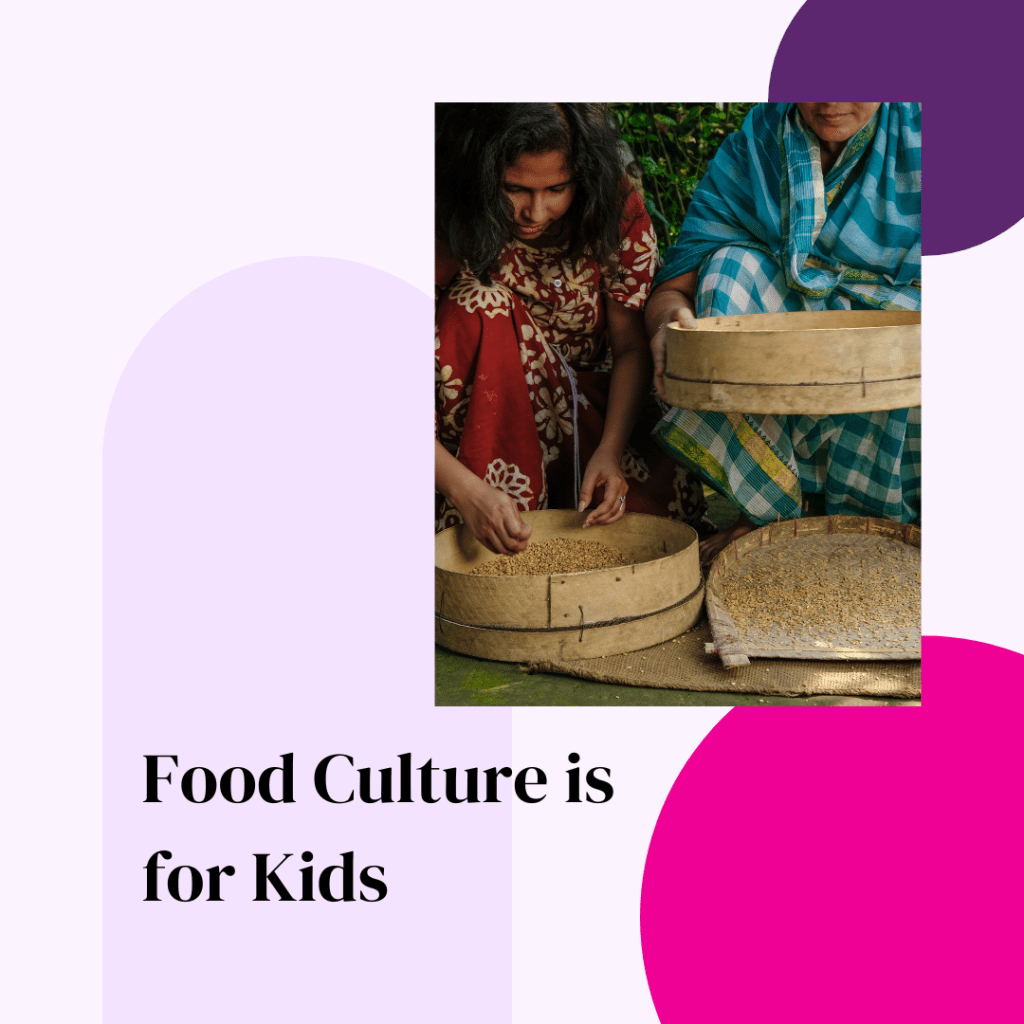
The Benefits of Teaching Kids About Cultural Foods:
- Cultural Identity: Understanding their food culture helps children develop a sense of connection to their heritage and ancestry.
- Appreciation for Diversity: Learning about different food cultures encourages children to respect and appreciate the rich diversity of culinary traditions around the world.
- Healthy Eating Habits: Traditional foods often feature wholesome, nutritious ingredients that can contribute to a balanced diet.
- Bonding and Connection: Preparing and sharing cultural foods can strengthen family bonds and create a sense of unity among community members.
- Emotional Well-being: A strong connection to one’s food culture can contribute to a positive sense of self and emotional well-being.
Challenges to Incorporating Cultural Foods: As we mentioned earlier, there are several challenges to incorporating cultural foods into daily life with kids. Some of these include:
- Time constraints: Preparing traditional dishes may be time-consuming or require specialized techniques.
- Unfamiliarity: Children may be hesitant to try new or unfamiliar ingredients and flavors.
- Access to ingredients: Some traditional ingredients may be difficult to find or expensive in certain areas.
Tips for Incorporating Cultural Foods Without Complications: Despite these challenges, it is possible to incorporate cultural foods into your family’s routine in a simple, accessible way. Here are some tips:
- Start with simple dishes: Choose traditional recipes with minimal ingredients and straightforward preparation methods.
- Focus on staple ingredients: Incorporate staple ingredients from your food culture into everyday meals, such as using rice, beans, or pasta.
- Share stories: Discuss the history and traditions behind the dishes you prepare, helping children connect with their food culture on a deeper level.
- Get kids involved: Encourage children to participate in meal planning and preparation, assigning age-appropriate tasks.
- Simplify complex dishes: Adapt traditional recipes to use modern appliances or shortcuts to make them more accessible for busy families.
- Celebrate cultural events: Observe and celebrate cultural holidays, festivals, and events that involve traditional foods.
- Explore diverse food cultures: Introduce children to a variety of food cultures, helping them appreciate the richness and diversity of global culinary traditions.
Conclusion: Teaching children about their food culture is an invaluable investment in their personal development, fostering a sense of identity, belonging, and appreciation for the diverse culinary traditions that make up our world. By incorporating cultural foods into daily life, families can create meaningful connections, promote healthy eating habits, and ensure that these important traditions are preserved for generations to come.
References used:
- Karmel, A. (2015). The Importance of Teaching Children About Food. The Huffington Post. Retrieved from https://www.huffpost.com/entry/the-importance-of-teaching-children-about-food_b_6961768
- Fiese, B. H., & Schwartz, M. (2008). Reclaiming the Family Table: Mealtimes and Child Health and Wellbeing. Social Policy Report, 22(4), 3-19. Retrieved from https://files.eric.ed.gov/fulltext/ED521818.pdf
- Walsh, A. D., Hesketh, K. D., van der Pligt, P., Cameron, A. J., Crawford, D., & Campbell, K. J. (2019). Exploring family sociodemographic factors as predictors of child consumption of fruit, vegetables, and discretionary foods. Public Health Nutrition, 22(17), 3249-3259. Retrieved from https://www.cambridge.org/core/journals/public-health-nutrition/article/exploring-family-sociodemographic-factors-as-predictors-of-child-consumption-of-fruit-vegetables-and-discretionary-foods/3F7E388895F0B4BFE3E3C7123B4BFD1C
- Gagné, D. (2015). Food Heritage: Connecting Students to their Food Traditions. Canadian Food Studies / La Revue canadienne des études sur l’alimentation, 2(1), 191-197. Retrieved from https://canadianfoodstudies.uwaterloo.ca/index.php/cfs/article/view/94
- Vidgen, H. A., & Gallegos, D. (2014). Defining food literacy and its components. Appetite, 76, 50-59. Retrieved from https://www.sciencedirect.com/science/article/abs/pii/S0195666314001177
- Birch, L., Savage, J. S., & Ventura, A. (2007). Influences on the Development of Children’s Eating Behaviours: From Infancy to Adolescence. Canadian Journal of Dietetic Practice and Research, 68(1), s1-s56. Retrieved from https://dcjournal.ca/doi/pdf/10.3148/68.1.2007.S1

Caring for oneself shouldn’t be hard. Yet, if you’ve ever experienced restrictive dieting or the hang-ups of trying to conform to predetermined beauty standards that society has dictated, it can feel borderline impossible. But let me tell you something: You deserve better and food freedom is worth fighting for! As someone who’s been through a roller coaster journey filled with anti-diet concepts, healthy lifestyle changes rooted in decolonized wellness principles and ED recovery strategies, I understand how liberating–and downright necessary–finding restorative food freedom can be within this oppressive society. So if you’re ready to rise up against outdated diets/body hate narratives and reclaim your power as an individual striving towards healing through food – then stay tuned! I’m here to share my story & provide insight so both marginalized bodies and allys alike may find their way down a healthier road filled with sustainable nourishment regardless of one’s differing abilities, backgrounds or beliefs.
Introducing Food Freedom and Why it Matters
Defining food freedom for yourself and journeying toward it is one of the most fundamental steps in reclaiming your body’s autonomy within oppressive systems. Eating is a part of every day life, especially since our survival depends on nourishing ourselves to keep going. Yet in society, food has become so wrapped up in systems of oppression – from policing who gets access to food and defining healthy eating as one type, to using bodies as objects or training them to respond accordingly to diet culture. It’s time to start unleashing the power that lies within us to redefine how we view food, including unlearning harmful patterns driven by diet culture at large. If done properly, anti-diet ED recovery and decolonized wellness meal plans can become more than diets sprung by diet culture; they can focus on loving the way we be and offer compassionate solutions for our mental health and external wellness goals.
Exploring Oppressive Systems and How They Impinge on Food Choice
With oppressive systems in place that limit our access to food, we have become accustomed to a narrow view of what is considered “normal” within a society ruled by majority opinions. The need for food must be considered within the confines of the system and its limitations in order for us to make informed decisions about what we choose to eat. Those in marginalized bodies are more vulnerable and affected by oppressive systems, which can greatly impinge on their ability to enjoy food freedom and make choices that can nourish their bodies and souls. It’s time to explore these limitations so that everyone can have equal access to food without feeling like they are living in an oppressive prison of food rules they must follow or else face societal punishment. Food freedom should be empowering and not restrictive.
Strategies to Decolonize Our Relationship with Food
Taking control of our relationship with food can be an incredibly enlightening experience, but creating a truly emancipated and decolonized approach requires more than just creating better eating habits. Seeking out an anti-diet ED recovery plan is only the first step in finding genuine food freedom. To supercharge this liberating process, we must unlearn what our culture has taught us about dieting and disordered eating, as well as challenge the oppressive structures that hold marginalized people back from finding true nourishment. With dedication and meaningful action, it is possible to take small steps toward realigning our view of food, one that values nourishment rather than perfectionism. By exploring our preconceived notions of internalized oppressions, recognizing oppression within society at large, and carving out healthy pathways of self-discovery through physical and emotional practices – it is possible to cultivate a lasting kind of liberation in term ins of personal nutrition.
Eating in an Autonomous Way: Free from Diet Culture and Weight Stigma
Achieving food freedom can seem like a daunting task, especially when attempting to do it in our current diet culture-dominated and weight stigma-filled world. But take heart: with a little know-how and a positive attitude, you can create an autonomous diet, far removed from the oppressive forces of society. It means learning healthy ways to nurture your own body while also staying in tune with social justice and environmental issues. This means understanding the nuances of how intersecting identities impact dietary choices, taking ownership of your health journey, and being an advocate for nutrition education that isn’t rooted in restrictions or societal expectations. Establishing autonomy over your eating habits is truly an art form, but with some practice and guidance, you can find true food freedom — without external rules or limitations.
Answering the Question of “What Should I Eat?” Without Guilt or Shame
Trying to answer the question “what should I eat?” without feeling guilty or shameful can be a difficult journey. However, finding food freedom – which is being able to determine when and how we nourish our bodies free of cultural pressures and expectations – is possible. Allowing yourself permission to enjoy foods that bring you joy regardless of cultural or societal conditioning can be a powerful step towards true food freedom. Food choices should be based on what fuels us best mentally and physically, rather than what society tells us is right or wrong. What’s most important is recognizing the validity of our own unique bodies and honoring them with nutritious, delicious, and satisfying meals that work in tune with our individual needs!
The Role of Self-Care in Establishing Food Freedom
Establishing food freedom requires a holistic approach that tackles both internal and external factors. Self-care is essential for reclaiming autonomy in the relationship that marginalized bodies have with food. This means going beyond simply making ‘good’ or ‘healthy’ choices, and instead focusing on recognizing, honoring and giving yourself permission to follow your own nutritional needs without judgement or guilt. Through informed self-reflection we can connect our personal wellness to systemic oppression and build upon that knowledge to make empowered decisions about what foods we feed our body. And ultimately, navigate oppressive constructs in our society to establish a culture of food freedom and health equity for all.
Food freedom is so much more than having the “permission” to eat whatever we want. It’s about decolonizing ourselves and our diets, so that we can create autonomous relationships with food free from oppressive systems, guilt, and shame. It’s an act of self-care and liberation, in which we believe we deserve to and have the right to nourish ourselves without judgment or restriction. Ultimately, it takes an immense amount of courage to heal past trauma and establish food freedom amongst all these oppressive structures trying to take away that right from us. The journey might be hard, but by honoring our own relationship with food after recognizing how it intersects with social injustice, we can find autonomy in choosing what fuels us—even in a society that still tries to judge us for it.
Improving Your Relationship with Food
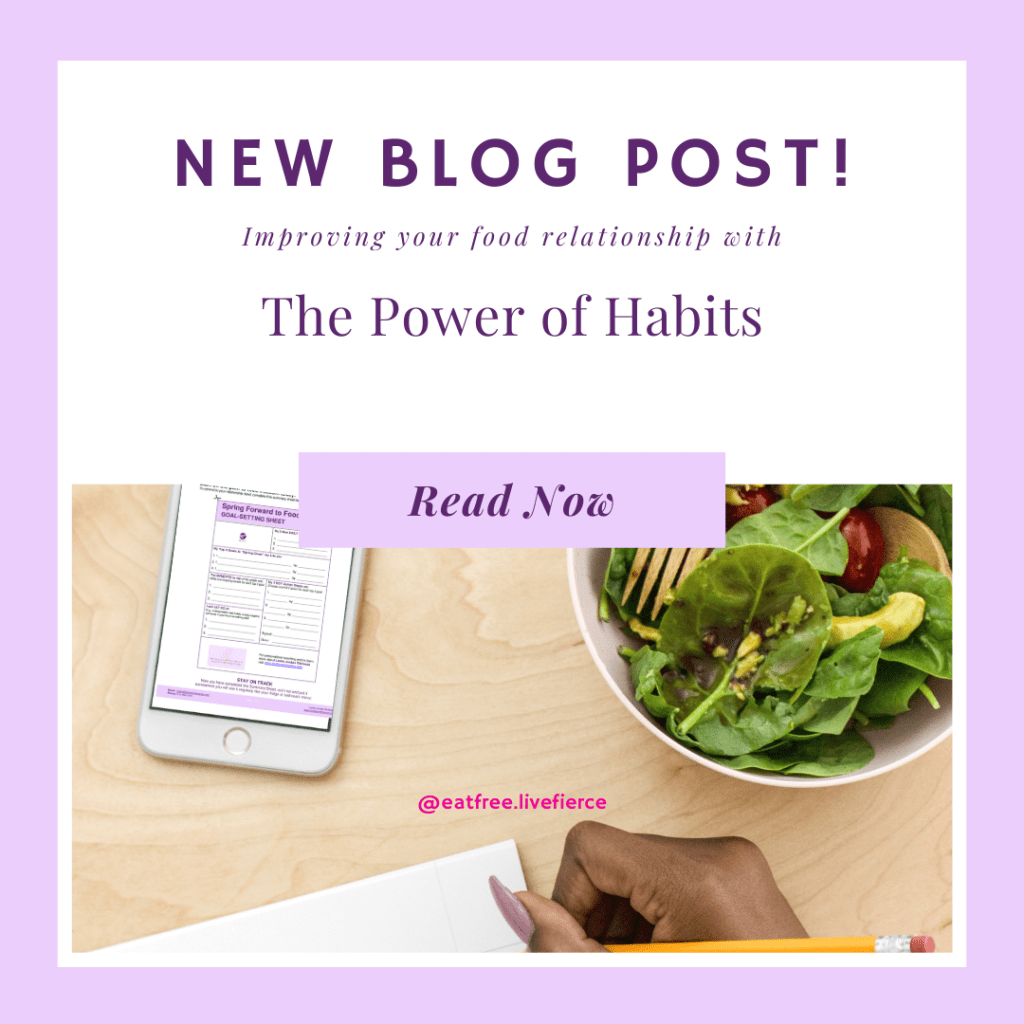
Embarking on a journey to improve one’s eating habits can be both exciting and challenging. One effective way to make lasting, positive changes is by creating and nurturing new habits. By understanding how habits work and implementing them consciously, you can make small, consistent changes that ultimately lead to a healthier and happier lifestyle. In this blog post, we will explore how habits can be harnessed to bring about positive change in your eating habits.
The Science of Habits
At its core, a habit is an automatic behavior or routine that’s triggered by a specific cue or context. Habits are formed through a process called “habit loop,” which consists of three main components: the cue, the routine, and the reward. When we perform a behavior frequently enough in response to a cue, and it’s followed by a rewarding experience, the habit loop is reinforced, making the behavior more automatic over time.
Here are five practical steps to help you use habits to make positive changes in your eating habits:
- Start Small and Be Consistent
One of the most important aspects of habit formation is to start small and be consistent. Instead of trying to overhaul your entire diet at once, focus on one or two small changes that you can commit to every day. This could mean choosing to drink water instead of soda or adding in a fruit or vegetable with each meal. By making these manageable changes, you’ll gradually build the desired eating habits that will stick.
2. Identify Your Triggers
Understand what triggers your unhelpful eating habits. Do you tend to snack when you’re bored, stressed, or watching TV? Identifying these triggers can help you develop strategies to address them. For example, if you’re prone to stress eating, consider taking up a relaxing activity like meditation, going for a walk, or practicing deep-breathing exercises.
3. Plan Your Meals and Snacks
Planning your meals and snacks ahead of time can make it easier to meet your food and pleasure needs. When you have a plan in place, you’re less likely to fall back on undesired options when hunger strikes. Set aside time each week to plan your meals, and make a shopping list to ensure you have all the ingredients you need. Batch cooking can also be helpful, as it ensures you have balanced and filling meals on hand for busy days.
4. Focus on Mindful Eating
Mindful eating involves paying attention to your hunger and satiety cues and eating without distractions. By practicing mindfulness, you can better understand when you’re truly hungry and when you’re eating out of habit or emotion. Slow down during meals, savor each bite, and listen to your body’s signals to help you make more intentional food choices.
5. Create a Supportive Environment
Having a supportive environment can make it much easier to develop and maintain healthy eating habits. Surround yourself with people who encourage your efforts, and don’t be afraid to ask for help or accountability when you need it most. Also, condsider the actual environment. Do you need to eat in front of the TV or can you committ to eating at the table? Make it nice! Create ambiance and set the stage to make eating an enjoyable event.
In conclusion, the positive power of habits in our daily lives cannot be overstated. By establishing positive habits, we can create structure, achieve our goals, and free up mental energy. So why not take the time to identify some positive habits that you can incorporate into your daily routine? Your future self will thank you for it.

Introduction
In a world where appearance often seems to be everything, it can be challenging to maintain a positive body image. Social media, advertising, and pop culture can sometimes promote unrealistic beauty standards that leave many people feeling inadequate. However, having a positive body image is crucial for our mental, emotional, and physical well-being. In this blog post, we will explore the importance of a positive body image and provide practical tips for fostering self-love and acceptance.
Defining Body Image
Body image refers to the perception, thoughts, and feelings an individual has about their physical appearance. A positive body image is when you feel comfortable and confident in your body, while a negative body image involves dissatisfaction and self-criticism. It is important to understand that body image is subjective and can be influenced by various factors, including personal experiences, family, friends, and the media.
The Importance of Positive Body Image
- Mental Health
A positive body image plays a significant role in maintaining good mental health. When you feel good about your body, you are less likely to suffer from anxiety, depression, and low self-esteem. Conversely, a negative body image can lead to mental health issues, causing emotional distress and a constant need for validation from others. Cultivating a positive body image helps create a healthier mindset and promotes emotional resilience.
- Self-esteem and Confidence
When you appreciate and accept your body, your self-esteem and confidence naturally increase. You are more likely to engage in activities and pursue opportunities that you might have avoided due to insecurities about your appearance. Having high self-esteem can also make it easier to navigate challenges and setbacks, as you are more likely to trust your abilities and value your worth.
- Healthy Relationships
A positive body image sets the foundation for building healthy relationships. When you are comfortable in your skin, you are more likely to attract partners who appreciate and love you for who you are. Moreover, self-acceptance can lead to better communication and understanding in relationships, as you are less likely to project insecurities onto your partner.
- Physical Health
Having a positive body image is also linked to better physical health. When you appreciate your body, you are more likely to make healthier choices regarding exercise, nutrition, and self-care. Instead of punishing your body through excessive dieting or over-exercising, you are more likely to adopt a balanced and sustainable approach to wellness.
Practical Tips for Fostering a Positive Body Image
- Practice Self-Compassion
Learning to be kind to yourself is the first step towards developing a positive body image. Treat yourself with the same empathy and understanding that you would offer a friend or loved one. Remember that everyone has flaws and imperfections, and these do not define your worth or value.
- Surround Yourself with Positivity
Be mindful of the people, images, and messages you surround yourself with. Choose to follow social media accounts that promote self-love, body positivity, and diversity. Surround yourself with friends and family members who uplift and encourage you.
- Focus on What Your Body Can Do
Instead of fixating on how your body looks, try to appreciate what it can do. Celebrate your body’s strength, flexibility, and endurance. Engaging in activities that make you feel good, like yoga, dancing, or hiking, can help you develop a deeper connection with your body and its capabilities.
- Set Realistic Goals
When setting fitness or health goals, focus on what is achievable and maintainable for your unique body. Remember that everyone’s journey is different, and comparing yourself to others will only lead to frustration and disappointment.
- Challenge Societal Standards of Beauty
Recognize that the media often presents an unrealistic, narrow definition of beauty. Embrace the idea that beauty comes in all shapes, sizes, colors, and abilities. Encourage yourself and others to challenge societal expectations and celebrate the diversity of human bodies.
Having a positive body image is essential for living an emotionally and physically healthy life. An unbalanced relationship with your body can have devastating consequences. Taking the time to practice self-compassion, promote positivity, appreciate what your body can do, set realistic goals and challenge societal standards of beauty can help you foster a better relationship with yourself and your body.
Whether you are struggling with body image or are in a more balanced place, challenge yourself to look at how positive or negative feelings about your body have impacted your life. Body image can influence relationships, mental health, physical health and self-esteem and confidence.
I invite each of you to embark on a journey towards self-acceptance and love by trying out the tips mentioned above! Let me know – How has your body image ever positively or negatively affected you?
It has been a minute since I have posted here on my little corner of the web! But I have been busy!
I was just published on the blog of Project Heal, an organization fighting to break down systemic, healthcare, and financial barriers to eating disorder treatment.
Check out the post here!

Teacher of the Year Goes to 2022
This year was a doozy. It was the first year that I was a full-time entrepreneur as a holistic ED recovery coach and making that move on the heels of the slow-exiting COVID-19 pandemic (like–move on already and stop holding the door open!!) was scary and exciting. I figured it would be slow going and slow growing, and it was in some ways. I am not going to bore you (I hope) so I will get to it!
Going Solo is Work
Like a lot.
And it all fell to me. And life gave no f*cks. So there’s that.
Marketing-me. Public relations and media-me. Operations-me. Finances-me. Strategy-me. Research and development-me. Legal-me. Billing-me. Making freaking copies-me. I just wanted to help people. Where was the time to do that part?
I was under the impression that I would have a plan, and I’d work the plan, and BOOM! Business! After all, I had been moderately successful at side-hustling in this industry for about 12 years. I knew my market and had matched my skills to my scope. Not until I left my steady non-profit leadership position (with limited problems and a staff!), I realized how much I had underestimated everything–the workload, the learning curve for tech, for social media, the self-imposed pressure, and how my friends-non-entrepreneurs-understood about what I was doing.
I watched as the pandemic slayed some time-and tech-weathered businesses and new ones cropped up with near overnight success. I wondered why–what did they know or do that was different from established ones.
And of course, in my own business, as potential clients started to trickle in, they looked like me, and maybe like you. There were challenges and the pain of countless relapses and “1 step forward and two steps back” tales when it came to conquering their eating disorder. A lot–so many it makes me want to shed a tear–opted not sign on with me as a coach or did not stay long-term. They almost all stated that my freebies or brief services had been helpful and they would try to take it from there on their own.
I am no stranger to this attitude of doing it myself. After all, I had traded in my 40 hour a week position to work ALL THE HOURS myself. Even the first years of my recovery from binge eating disorder I toughed out alone. But I know that only when I got help and how that support helped me to stick with it did things really turn around for me. It is “getting to the other side” that I want to help people to experience!
Going Solo Does Work
But it is really hard.
Just like in business, going it alone in recovery can work. There may even be times where that is the best way. You may lack treatment access or options that are suitable (like if what is available has caused you more harm). In my realm, for example, being in a larger body and dealing with disordered eating may lead to the suggestion that you lose weight which can only make the disordered eating worse.
But often, there are other issues that treatment, therapy, or coaching can help with as well, like depression, or severe and life-threatening ideations or behaviors. Sometimes, health can become so bad before a decision to seek help is made and issues like organ damage is not reversible and possibly could have been prevented with earlier intervention.
Needless to say, working towards a new reality in business or your wellness will be a tough and often uncomfortable journey. The effort is well worth it but help and support can make it so much more achievable!
Community Support Can Save a Solo
This year in particular, there were lots of stories about the rise of eating disorders and disordered eating born of the pandemic. That trend helped my business as an eating disorder recovery coach for sure. (This was a problem of sorts in and of itself. As I grew an audience, there was an influx of potential clients that I was not really equipped to handle. But I digress.)
There were lots of stories of celebrity eating and body image struggles and the ones that coped the best all had major support. I get it; they have access to resources. But my clients who made the most progress also had strong circles of support. They did so much better than the ones who only had me, that I created a community to help bridge the gaps. Being isolated in a healing and recovery journey is not the only option. Not by a long shot and honestly, it has given me hope.
Even with entrepreneurs, there are communities to share stories, relate to, and learn with and from each other. I cannot say how lucky I was one to find a peer group of entrepreneurs in my niche. Instant connections, support, and understanding of what I was going through just made this year easier!
Community Lessons
The following are the TOP ten takeaways I have this year from working within a supportive community and by creating one for my clients:
- Continuing to work on my dreams or recovery is a choice and my happiness is my responsibility.
- I am enough and have value not tied to my weight (or income)
- Don’t get caught in the trap of comparison.
- It does get easier.
- Everyone has a lesson to teach you.
- Not everyone will come along for the journey and that is okay!
- Cravings, and feelings, are temporary. They may be uncomfortable but they pass.
- I do not have to take part in the expectations of society.
- Even times of 2 steps backwards, you don’t lose what you learned. You can pick yourself up and keep going.
- Make peace with the past.
Some of these lessons, I am just really understanding 15 years into recovery. Some are new. All are nuanced and it doesn’t matter if you have or have not learned them yet. It is likely that you will or have learned many more.
The Biggest Lesson (Yet!)
The biggest lesson I learned this year was that I am stronger when I ask for help.
As I write about it, it seems so simple. But this was tough for me. I look back and realized that I took on so much responsibility and was battling imposter syndrome, fear of being called lazy, and the fear that I would be viewed as less than (this took me straight back to my early days of recovery).
Fortunately, I realized that my clients were dealing with these feelings too. So, I took my own advice and sought help with the things I did not know or just when I needed to talk about things.
I believe that I am still here because I was able to get outside support and different perspectives. I was also able to give others a chance to help, which made them feel good and was within their zone of genius. Talk about a win-win.
I am certain that you can see yourself in this situation. I hope so. I hope that you can ask me for help with your recovery journey. I hope that you have access to a supportive community for whatever you are trying to accomplish in your precious life!
Whether the journey that you are on is about entrepreneurship, eating disorder recovery, or just wellness in general, hopefully these can be a help or hope to you on your path ahead. Please know that as long as this little corner of the web is up, you are never really alone!
Do you have other gems that you have mined from your experiences? I would love for you to share them in the comments!
To Balance Blood Sugar BALANCE is the Key!
The fall and winter holiday season can be both a wonderful time and a challenging time if you have food relationship struggles or chronic illness, like Diabetes. Roughly 12% of the population has some type of diagnosed diabetes, so it is likely that you or someone you know needs to maintain blood sugar balance. The rich sweet treats served during the holidays can be troublesome if you are not careful. Holiday parties and long-distance travel can pose an extra challenge when you have diabetes. With reasonable choices and advance planning, you can enjoy the holidays and manage your condition at the same time.
While I am not diabetic, I have diabetic clients and concerns are always discussed. I grew up with two diabetic parents, as well as several other family members with this disorder. I have helped in finger sticks, insulin doses, and nutrition-based strategies for most of my life. I have seen amputations, vision loss, dialysis, and kidney transplants JUST IN MY FAMILY as a result of diabetes. I have also seen active and long lives.
Courses of treatment and medications are individualized and constantly evolving as medicines and monitoring devices develop as well. From finger sticks to CGM (constant glucose monitoring), oral meds to glucose pumps, I have had to learn about it! Of course, movement and food choice (and timing) continue to be a cornerstone of traditional treatments–which is where I can help in conjunction with medical professionals.
For this tip-based post, I have the pleasure to collaborate with Dr. Liz Kopco, PhD.
Disclaimer: Please understand although I am a certified health and nutrition coach, I am not your coach nor am I a doctor or physician. All content on this blog and website is for informational and educational purposes only. The information provided does not constitute any medical or health advice nor does it constitute or establish any kind of a coach/professional – client relationship by your using any information on this site. Although I strive to provide accurate and helpful information, the information presented here is not a substitute for any kind of professional, medical, or health advice, and you should not rely solely on the information presented on this site. Always consult with the appropriate professional in the area for your particular needs and circumstances prior to making professional, legal, medical, or financial investments or transactions.
Mindful Eating and Living Strategies
As an Eating Disorder Recovery Coach, I use Mindful Eating as an accessible and effective tool. Mindful Eating can help reconnect us to our natural inner wisdom and we can reestablish communication with our bodies. Hunger and fullness are only two ways that our bodies communicate with us! Mindfulness can be applied to almost anything and here are few ways that mindful eating and mindful living can help in balancing blood sugars and enhance your diabetes management enabling you to enjoy the holidays!
- Listen to your body (and not the external environment) for any cues to eat or to stop eating.
- Eat and enjoy your meals without distractions from technology (sports games, cell phone, TV) and focus on enjoying the food and company.
- A timing tip: Try to eat your carb rich foods towards the end of the meal. This gives your body time to ramp up insulin production so more is present in your body when you eat your carbs.
- Decrease mindless eating by using small plates, drinking from smaller glasses, and simply having more nutrient-dense foods at eye- and arm- levels.
- Build in movement-based activities like family post-meal walks or friendly dance battles! Make it fun and easy for all generations to join in.
- When traveling, ensure you have extra medication (in case of delays) and all of your pertinent info (prescriptions, dosages, doctor’s contact, and insurance information) in case of emergency. Travel with meds in their original packaging and labels!
A mindful eating study has demonstrated that mindful eating education is just as effective in diabetes management as nutrition-based education in decreasing blood glucose and keeping it balanced (Miller et al). The study showed that both strategies are effective in the management of diabetes (blood sugar balancing, insulin as prescribed, and movement). This means that when people can receive general nutrition information and how it applies to diabetes, that tapping into our inner wisdom is one of the best strategies we all can access to have the best quality of life without hyper-focusing on foods, which can lead to disordered eating.
Dr. Liz’s Advice
I always want to share great information and build community with those with lived experience. I am so lucky to have crossed paths with Liz at an eating disorder conference and reached out to her for her best tips! Dr. Liz Kopco, a Latina Health Coach and Advocate, strives to share her experiences as a PhD in STEM (Molecular Biology) to learning how to thrive with type 2 diabetes for well-being of the community. Here, she shares her tips for the holidays:
- Pay attention to your mood: Blood glucose levels can really impact our moods. Higher blood sugar levels can make us easily irritated and frustrated. Low glucose levels can make us feel extremely drained, exhausted, and foggy-brained despite being well-rested.
- Check your pee: Keep an eye on how much you’re urinating and the color. Frequent urination can be a sign of high blood glucose levels. Darker-colored urine can indicate dehydration. Staying well hydrated by drinking at least half your body weight in oz can help keep your blood glucose levels within your target range.
- Eat everything in moderation: Living with diabetes doesn’t mean you have to restrict what you eat. Eating everything in moderation, so individual servings versus eating straight from the bag/container will help you be mindful with your eating, enjoy your favorite foods, and not have extremely high blood sugar level spikes.
- Swap or Keep: You can still enjoy all of your cultural foods when living with diabetes! To be mindful of your blood glucose levels, you can make ingredient swaps like using cauliflower rice instead of white rice in dishes. You can also enjoy your recipes just as they are but be mindful of the portion sizes you are eating. Enjoy that naan or tortillas!
Bonus tip: If you use a CGM, it helps to occasionally confirm your blood sugar levels with a blood glucose meter to make sure it is accurate before making any decisions about your health.
Dr. Liz believes that everyone deserves to live a happy, healthy, and fulfilling life. You can check out her website here!
Holidays are for Memories
The holiday season is a time of food, family, and fun. Diabetes, although serious, should not stop you from enjoying the season or a long, wonderful, life. Effectively managing your diabetes lets you enjoy all the festivities of the winter holiday season without compromising your health. Keeping yourself in top condition is a wonderful gift for yourself and your loved ones.
Reference:
Carla K. Miller, Jean L. Kristeller, Amy Headings, Haikady Nagaraja, W. Fred Miser. Comparative Effectiveness of a Mindful Eating Intervention to a Diabetes Self-Management Intervention among Adults with Type 2 Diabetes: A Pilot Study. Journal of the Academy of Nutrition and Dietetics, 2012; 112 (11): 1835 DOI: 10.1016/j.jand.2012.07.036
Tips to Manage the Season NOW!
While the holidays can be a time of joy, connection, and memory-making, when you are recovering from an eating disorder, they can also be a time of stress, anxiety, and possibly fear.
During the early years of my recovery, I was in the closet with my family about my treatment. I wish I could tell you why. I think that they would have been supportive enough but maybe not quite understand or validate my experiences. But that was the way it was so control of the environment was critical to me so I hosted Thanksgiving (which was the biggest feast for my family).
As you might imagine, this caused me a great deal of stress that I eliminated only through planning. I needed to prepare the family faves AND as the hostess I could send them home with the bulk of the leftovers so I would not have some elbow-deep dressing and cranberry binge later.
The holiday season was where I really learned to rely on my mindful eating skills–particularly around satisfaction and how beneficial planning and permission to enjoy the foods were to keeping me building a positive relationship with food.
I want to share some strategies that worked for me and my clients. If you have any experience, I would love to hear what has or is working for you!
Plan for You
The plans you make are for your benefit. You cannot expect the same people not to do the same things whether they are aware of your struggles or desire to change. Family and friends often mean well but can cause you stress and anxiety without knowing.
- Know where you will be going and who will be there. If there are allies, recruit them!
- Planning your events will help you anticipate your triggers and reactions so you can rehearse a different reaction beforehand. It is near impossible when you are completely caught off-guard at every turn!
- Have a self-care survival kit on-hand. This can include a snack or excuses to take a walk or sit quietly. You do what you have to for you.
Present Moment Is Key
Staying in the present moment is key to getting through this time. It is not helpful to dwell in the past or let your loved ones drag you down memory lane if it is not helpful. Additionally, these times are meant to be enjoyed so allow yourself to savor the flavors, the smells, the laughs, and the hugs!
- Bring your new self–and the skills you are learning–to the present moment. Do not feel like you have to revert to patterns of the past when you didn’t have the skills you have now. Your loved ones need to see you now.
- Don’t forget to breathe. A few deep breaths can be grounding and give you an opportunity to get your bearings enough to recall and apply any tools you have in your recovery toolkit!
- The holidays are a few days and will not break you although it may feel like it. The very next day is a day to start over. Recovery is a journey and not a destination. Be compassionate with yourself–you deserve it.
Mindfully Manage Your Expectations
If you are trying to heal your relationship with food and your body, the holidays can be challenging enough without you having the pressure of meeting the expectations of others or the ones you impose on yourself. This goes hand-in-hand with focusing on the present moment–that what is versus what should be!
- Avoid making major decisions (as possible) until the second week of January. The influence of holiday cheer (and eggnog) may not lead to the wisest choice.
- Avoid overscheduling yourself too. Spreading yourself too thin can make it easy to fall into old patterns.
- Practice non-judging others and yourself. Don’t enter into situations with any expectations, just a positive attitude.
Hopefully, these strategies will help you enjoy a wonderful holiday season and keep you making progress with recovery or change this year. Bonus: these tips can be useful year-round for other gatherings like weddings, graduations, and reunions!
Wishing you the best of the season and wellness!
Please like, comment, and share with someone who may find it useful!
Stress… we all deal with it. It’s unavoidable in fact but there are ways to cope with it and lessen its effects on our minds and the habits that form as a result. Eating is a coping mechanism for stress because when we eat something (Especially satisfying) just to eat it, this is a sure sign of stress eating.
Let’s delve further into the issues of emotional eating and pinpoint exactly why we stress eat and how to stop doing it!
Why We Turn To Food?
A survey conducted by the American Psychological Association found that about one-fourth of Americans rated their stress levels at about 8, with a 10 showing the most stress. It’s a pretty discouraging statistic as we all know stress is no fun mentally or physically as it can cause a host of health problems.
When stress persists, not only does it alter appetite and cravings, it can also change the chemistry in our bodies. High levels of cortisol, leptin, and adrenaline can negatively impact your sleep to organ function.
Stress eating, sometimes called comfort eating or emotional eating, can be an undesired pattern of behavior of using food to cope with stress, and various difficult feelings, such as boredom, pain, anger, and loneliness. If emotional or stress eating is something you struggle with you might not be surprised to hear that food is not a solution and can eating behind your emotions can lead to serious medical and mental health problems such as the development of an eating disorder or depression.
If you are using food or eating as your primary coping tool, it may be time to take a hard and long look at your eating patterns and to see how food temporarily helps you to avoid negative feelings and emotions, but does not really solve the root of the problem. That ice cream may feel really good going down at the moment, but likely after the binge is over, your distress remains and you probably feel even worse than before because of post-binge guilt and shame.
Relaxation is Key to Managing Stress
Stress is a constant companion, and most of us, through lots of practice, have become experts at elevating our stress levels. The ability to relax is an acquired skill too. Luckily, you can teach yourself to handle stress in a manner that minimizes it. However, the more stressed you feel, the more challenging it can be to relax.
Here are some relaxation techniques you can use instead of emotional overeating that can help you get on a path to better health:
- Meditation. The art of relaxing your body completely and focusing on your breath and your mind can cause the same release of feel-good hormones in your brain that occurs when you eat junk food, except it has absolutely zero negative effects. There are many types of meditation methods and it may take some time for you to learn the techniques that will help you the best. Learning meditation and practicing it daily can eliminate the impact of stressors in your life so you can finally quit eating to overcome stress.
- Visualization. This is similar to meditation except that you use your mind to “see” yourself making good food choices and being thinner as a result. If you are overweight or obese because of your eating habits, you can use visualization to help you establish a thin body image of yourself that is unencumbered by the constant need to eat in order to feel relaxed.
- Exercise. When you exercise for relaxation, you are not simply trying to burn calories but you are trying to find some source of happiness in simply being more active. Exercise can be a simple part of your daily life; you don’t have to be a star jogger or world-class athlete. Taking a simple walk around the block before dinner can relax your body so that you are only eating for good health and because you are hungry from exercise. Exercise releases positive endorphins in the brain that makes us feel better, and is an all-natural stress reducer that also has zero negative side effects.
- Tai chi. Tai chi is an ancient form of Chinese martial arts that has been found to be a great source of relaxation for many Westerners as well. Tai chi involves going through a series of martial arts type of movements done at a slow and fluid pace. The practice of Tai chi will not only relax you but it will burn calories and give you a better posture and better balance. It can be practiced by people of just about any fitness level.
- Yoga. There are many different types of yoga you can practice. Some are specifically designed for relaxation and comfort so you feel less of an urge to eat for comfort. Others are more strenuous, involving more complex poses that, when combined with meditation and breathing, serve to relax you and improve your level of well-being.
- Qi Gong. This is another practice we Westerners have picked up from ancient traditional Chinese medicine. It is similar to tai chi but is not as taxing. You use qi gong to enhance the flow of vital qi energy through your body to encourage balance of self, to feel better about yourself and live a healthier life without overeating.
Any of these measures, when practiced daily, can help you improve your quality of life and can replace the negative habit of emotional eating and making poor food choices. Try them and you might be surprised at how effective they can be.
Final Thoughts
It’s true… stress will never completely go away but if you heed to the information about the negative effects and decide that it’s time to end it right now, you’ll thank yourself later in life. How we treat our bodies and minds right now will determine how we function and feel later in life.
Finding food-free ways to cope with stress and getting in touch with our feelings teaches us to not cover them up but to understand why we turn to eating in the first place. It can be important to identify when you need additional help too so reading this post may be helpful as well!
Don’t be ashamed to help yourself overcome stress eating because you have one body and it’s essential that you keep it as healthy and functional as possible!
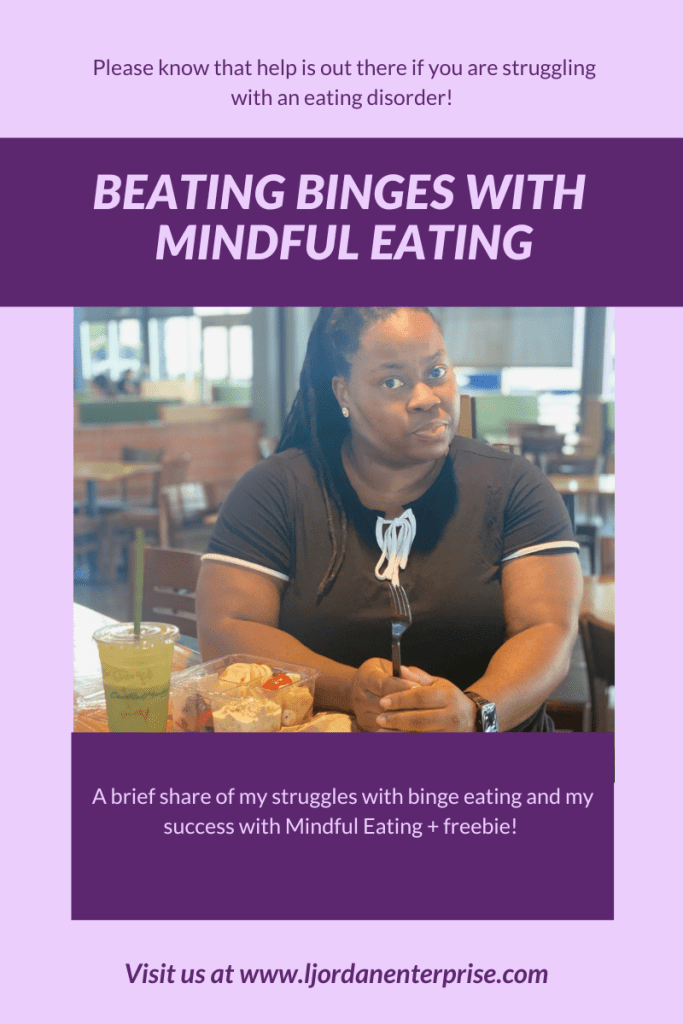
I am happy to share my journey but it is lengthy and I have not gotten a good short version yet! What I will say right here, right now is that it was years before I even thought I needed help and even then, I need different kinds of help at different times. As the layers got pulled back, something else came up for me in my journey. I am grateful that my first “therapist” who was a clinical psychology grad student (and friend) needed a subject and that she was really great (and well-guided by her professor). I am also grateful that as we were both learning, we were into mindfulness and that led us to choose to learn and practice Mindful Eating.
On this blog, you can read about the basics of Mindful Eating here or here so I am not going to explain that now. Instead, I want to share a little about how it helped me and then offer a free resource that might help you or someone you know and care about.
For me, much of the work of conquering my binge eating disorder was about healing from traumatic and formative events that had essentially stunted my emotional growth and maturity. I lacked some serious coping skills and filled in the gaps with food and disordered eating patterns. Once I named the event, accepted it and was able to process it completely and safely, I was able to replace eating in response to that sensation. There were a couple of events that triggered the urge to binge and with time, I was able to not feel the urge to binge mostly.
I say mostly because as a Black woman I am still triggered by acts of race-based violence and injustice. This is because one of the big traumatic events for me was race-related. It wasn’t until I started healing that I had to grapple with the fact that this trigger would likely be a part of my life and I had no way to control its occurrence. I could only cope with my feelings.
Enter mindful eating. This practice helped me to learn what physical hunger felt FOR ME. It helped me learn what satisfaction -and the difference between being satisfied and full–felt like FOR ME. I learned that it was different from day to day, from meal to meal.
Mindful eating helped me take “mental” learning and “feel” it in my body and this was a game changer when it came to putting a little space between the urge to binge and the actual binge event. I won’t lie. In the beginning, the space created or delay wasn’t always an effective deterrent. But as I healed and learned about what I needed most in those moments of feeling triggered and compelled to eat, it was enough to ask myself about what I needed and gave me time to get that or do that instead. Mindful eating worked in tandem with my healing as a key tool to delay and disrupt that binge cycle. I had the chance to learn a new behavior that was centered on my needs and rarely was eating what I did.
This is why it can be a powerful tool for others. So, I am giving away a free guide for those who join my mailing list (you can expect periodic emails that are like a roundup of tips and resources and funny things and valuable info for eating disorder recovery. There is sometimes info about a promo I may be doing!) right here! There is NEVER an obligation to buy anything but I would appreciate not sharing the guide but instead sharing how to get the guide from here!
Please like, comment, and share this blog post!
 Liberati Wellness